For me, The Princess Bride isn't about Buttercup and Westley. Does that surprise you? It's about little Billy, struggling through pneumonia and having a story read to him by his father, and their finally forging a connection. It's little Billy taking that experience, realising that he truly loved stories, and growing up to write and create his own. As an adult, he tries to use that original story to forge a relationship with his own son, and then with his grandson. The story that's being shared is the one about Buttercup and Westley, and I don't want to give the wrong impression; that story is told in full. But in-between that story, in the imaginary 'boring bits' that first the fictitious Goldman senior and then the semi-fictitious William Goldman cut out, is this story, about how we relate to stories, how we love them, and how we share them with others.
The movie then, isn't a remake of the book. It's a different version, a different grandfather sharing the same story with his grandson. You can almost view it as a sequel to the book, another story about how we interact with stories.
I first read the book fifteen years ago, shortly after the 30th anniversary edition was released. That edition has more than the original book, in an odd blend of fiction and reality. While William Goldman is real, his father isn't Florinese, and he doesn't have a son. Nor is Stephen King Florinese...but the story about casting Kathy Bates in Misery and her asking if she could tell her mom is true. And so is all the little trivia about getting the movie made, and the rehearsals. Like Mandy Patinkin slapping Andre the Giant across the face and saying "faster, Fezzik!", or the director recording all of Andre's lines for him verbatim, so he could try to lose his French accent before filming. I feel like William Goldman is really interested in showing the man behind the curtain, especially in light of his work, Adventures in the Screentrade.
There's also a little more to the Princess Bride story, including a little bit more about Inigo Montoya's past and the time he found true love, but gave it up because he was still in the middle of his revenge quest. I love Inigo's story, and I'm sad that Domingo's part is so cut down in the movie.
I feel the same way about Peter Pan, though for different reasons. Some of the movies do have the events of book in full...but they still fail to get across the darker, sadder undercurrent of children being "young and cruel and heartless". Peter doesn't know how to care about anyone else. Every single woman in the book is in love with him, and he doesn't comprehend it at all, but that's more to it than that. He forgets Hook and Tinkerbell and even Wendy for a while. He 'thins out' the Lost Boys when they get too numerous; for Peter, nothing has consequences and nothing really matters, and there's a certain horror in that that I've never really seen in the movies. Lost Boy by Christina Henry takes it and runs with it, in a way that really works (though, I don't really recommend Alice and Red Queen by the same author in the same way; they're less about finding what was originally in the story and bringing it out, and more "how can I make every single element a metaphor for rape and/or torture?").
Showing posts with label Peter Pan. Show all posts
Showing posts with label Peter Pan. Show all posts
Monday, 13 November 2017

Friday, 21 November 2008
In Which We Discuss The Children's Section
Why do they hide all the good books here?
In my local library (Birmingham Central), the children's section is on an entirely different floor, with miniature chairs, decorations in pastel colours, and, once, palm trees made entirely of coloured balloons.
Now, the other day, I reserved a few books - namely, Bridge to Terabithia and Christopher Pike's Weekend. I noticed that, although I'd be picking them up from the main floor, the children's section had several copies of Pike's books. So, when I returned Bridge to Terabithia yesterday morning, I decided I'd return it to the children's section, then go ahead and explore their teenage shelves.

Honestly, it's amazing how nerve-wracking that was. I felt like an imposter. I'm twenty years old, and told that I look older. I felt like Gulliver walking into Lilliput.
Once I'd got over the initial embarassment, it wasn't so bad. The staff were friendly (it looks like they shift them between floors, so I'd seen a lot of them before), and none of the small children even looked at me. It also helped that an older man was in the queue in front of me.
I never made it to the teenage section, by the way. The Discworld Big Comic, Mort, grabbed me on the way past.
It's interesting how the books are segregated, by age. As I said, I found Mort in the children's section, and it was called a Big Comic. Neil Gaiman's Sandman series are upstairs, in the Graphic Novel section. Now, Gaiman is scarier than Pratchett, but they're not terribly different. And, in fairness, Death is one of the main characters in Mort.
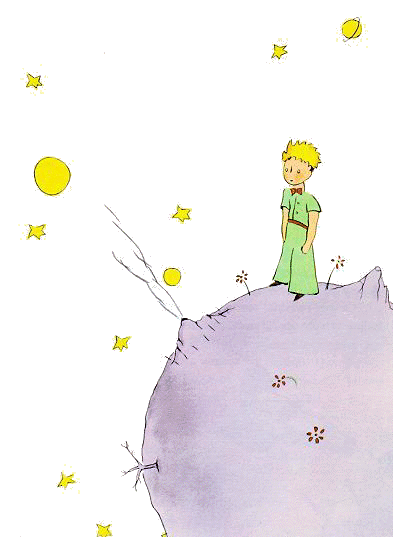
A lot of children's books can be equally enjoyed by adults, too. While many are quite vapid, and assume that young = stupid, some are interesting. They're the kind of books you get more out of, every time you read them. Things like Peter Pan or The Little Prince, for instance. They're obviously children's books, but there's a lot in them for adults as well (honestly, if you've never read them, go take a look - you'll be pleasantly surprised).
The Discworld books and the Harry Potter series have both been given special 'mature' covers, so adults don't feel silly reading them. This is essentially the same as putting a different picture on the packaging for hair dye or moisturiser, so men don't feel silly using girly products.
In my local library (Birmingham Central), the children's section is on an entirely different floor, with miniature chairs, decorations in pastel colours, and, once, palm trees made entirely of coloured balloons.
Now, the other day, I reserved a few books - namely, Bridge to Terabithia and Christopher Pike's Weekend. I noticed that, although I'd be picking them up from the main floor, the children's section had several copies of Pike's books. So, when I returned Bridge to Terabithia yesterday morning, I decided I'd return it to the children's section, then go ahead and explore their teenage shelves.
Honestly, it's amazing how nerve-wracking that was. I felt like an imposter. I'm twenty years old, and told that I look older. I felt like Gulliver walking into Lilliput.
Once I'd got over the initial embarassment, it wasn't so bad. The staff were friendly (it looks like they shift them between floors, so I'd seen a lot of them before), and none of the small children even looked at me. It also helped that an older man was in the queue in front of me.
I never made it to the teenage section, by the way. The Discworld Big Comic, Mort, grabbed me on the way past.
It's interesting how the books are segregated, by age. As I said, I found Mort in the children's section, and it was called a Big Comic. Neil Gaiman's Sandman series are upstairs, in the Graphic Novel section. Now, Gaiman is scarier than Pratchett, but they're not terribly different. And, in fairness, Death is one of the main characters in Mort.
A lot of children's books can be equally enjoyed by adults, too. While many are quite vapid, and assume that young = stupid, some are interesting. They're the kind of books you get more out of, every time you read them. Things like Peter Pan or The Little Prince, for instance. They're obviously children's books, but there's a lot in them for adults as well (honestly, if you've never read them, go take a look - you'll be pleasantly surprised).
The Discworld books and the Harry Potter series have both been given special 'mature' covers, so adults don't feel silly reading them. This is essentially the same as putting a different picture on the packaging for hair dye or moisturiser, so men don't feel silly using girly products.
Thursday, 13 November 2008
In Which We Discuss Porn
Speaking of Alice in Wonderland, I read Alan Moore's Lost Girls recently. That's a graphic novel (and really, we need a better word for that, it's so unwieldy). Alan Moore wrote Swamp Thing and The League of Extraordinary Gentlemen, but Lost Girls is slightly different.
It focuses on a time, just before the first World War, in an Austrian hotel. There, Dorothy Gale (of The Wizard of Oz), Wendy Potter (formerly Darling, of Peter Pan) and Alice Fairchild (of Alice in Wonderland and Through the Looking Glass) meet, and compare stories. Each of the three books mentioned is re-imagined as a discovery of budding sexuality. So yes, it's essentially Western hentai.
Incidentally, am I the only person who, when discussing graphic novels, has the urge to call them mangas? I know that's incorrect, but it's so much easier to say.
What's fascinating about it is how beautiful it is. It could be called art. Alan Moore's actually on record as saying that, if they'd send it was art, people would say "no, that's just porn". Whereas, if they call it porn, people say "no, it's art".
It's extremely beautiful, well done, imaginative pornography, with a lot of literary references (like a lot of Moore's work). Oddly, I didn't find much of it erotic. It's a bit like the way nudity isn't really considered a sexual thing in Sweden. For a lot of the book, sex was desexualised because there was so damn much of it. It was more interesting to see how Moore had reinterpreted the events of the books to be about sex. I especially liked the way he changed the meanings of the things the flowers said in Through the Looking Glass without changing a single word ("at least she's the right colour").
You get a lot more out of it if you've read the books, and it doesn't destroy them. I absolutely love Peter Pan, and I'm able to think of them separately. It doesn't bother me like a bad film adaptation would, probably because it's not an adaptation - more fanfiction.
Subscribe to:
Posts (Atom)