Sunday, 3 January 2010

In Which We Discuss January 2010

A record of the books I've read this month;


Number Name Author Date Began Date Finished
1 Bad Science Ben Goldacre 2009 10/1/09
2 Roadworks Stephen King (as Richard Bachman) 2009 8/1/2010
3 Confessions of a City Girl Barbara Stcherbatcheff 3/1/2010 4/1/2010
4 Everywhere We Go Dougie and Eddy Brimson 4/1/2010 20/1/2010
5 'Salem's Lot Stephen King 2009 15/1/2010
6
The Official DSA Guide to Learning to Drive

DSA
12/1/2010
15/2/2010
7 Nightwings Robert Silverberg15/1/2010 16/1/2010
8 Quirky, Yes. Hopeless, No.
Cynthia La Brie Norall, Ph.D

16/1/2010

???

9

The Thoughtful Dresser Linda Grant 19/1/201020/1/2010
10We Need to Talk About Kevin
Lionel Shriver
20/1/2010
23/1/2010
11
Cookie

Jacqueline Wilson

23/1/2010

23/1/2010
12Ring
Koji Suzuki

23/1/2010
25/1/2010
13Fast Food Nation
Eric Schlosser

25/1/2010
???
14
The Butterfly Tattoo
Philip Pullman
26/1/2010
26/1/2010
15
Memoirs of a Geisha
Arthur Golden 30/1/2010 8/2/2010


I'm going to split this into monthly posts, and then put it all together next year.

Wednesday, 30 December 2009

In Which We Discuss Sex

Let's start this post with a confession, just for a change.

When I was a little girl - about nine or ten - I thought being a prostitute didn't look like a bad career choice. Mostly, this was due to Pretty Woman. Sex and money, what could be bad about that? Of course, as I got older I learned a little more about it, and decided it wasn't for me. I'm not a girl who can separate sex and romance, or my homelife from my worklife, not to the extent required.


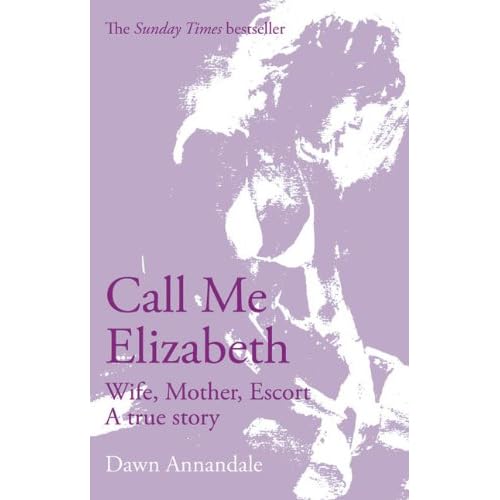
Still, I remain fascinated by the sex industry. A book I found very interesting was Dawn Annandale's Call Me Elizabeth, the true story of a woman who worked as an escort- (or call-) girl in order to fund the education of her six children. An articulate middle-class woman in her thirties, in many ways she didn't fit the typical idea of a prostitute - but, in another way she did. She'd been sexually abused by her father as a child, and although these events don't appear to directly influence her decision to sell her body, it seems telling that she saw fit to include this part of her history. Annandale had been away from her father for many years before she began work as a call girl, and it was in response to mounting debt, rather than, say, drug addiction or pressure from anyone else.


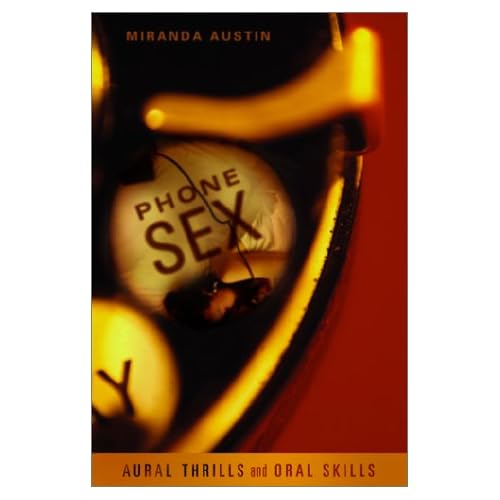
Another book about the sex industry which I found absolutely fascinating was Miranda Austin's Phone Sex, another set of memoirs. These are mostly anecdotes from Austin's time as a phone-sex operative, and make for a very interesting read. The book is absolutely laugh out loud hilarious, while still getting across the creepy feeling Austin got from certain clients. Austin actively enjoyed sex, and had always been told she had a sexy voice. She hadn't been abused, and nor was she on drugs.


Earlier, I bought a copy of Confessions of a Working Girl, by 'Miss S'. This one is the 'true story' of a prostitute who works in a brothel ('massage parlour', since brothels are illegal here in the UK), rather than on a street corner or going to client's homes, like a call girl. The blurb on the back cover reads as follows;


Miss S is smart, sassy, sexually frustrated and broke. With the rent money due, she spots an ad for a student job with a difference - in the massage parlour at the bottom of her road. Suddenly she can earn money doing something she is good at and get all the sex she needs.


Offered a job on the spot by Mrs B, an ex-working girl herself, Miss S quickly gets to grips with the rest of the girls. They include; Bella the house 'Domme', Carry the resident shrink, Tina the house snitch and Suzie the amateur porn star. That's not the mention the cast of clients; Mr Suck It Bitch, Mr Gay, Mr Pacemaker, Mr Councillor and Mr Willy Whacker...


Confessions of a Working Girl is the true, intimate diary of Miss S's extraordinary first year in a brothel and reveals exactly what a Gemini half hour really involves....


Honestly? My first thought at this point was "bollocks". Then I wondered why I thought that. I suspect it's because it sounds too happy. Do I honestly believe that every single prostitute in the world is unhappy, and dismiss entirely the idea that they aren't? I guess, instinctively, I do. And that can't be right, can it, to instantly disbelieve something just because it doesn't fit my preconceived stereotypes? After all, I can't exactly claim to have any intimate personal knowledge of the sex industry.


So, I started reading it. I'm now halfway through, and it turns out that while the blurb is complete bollocks, the book itself is really quite interesting. Most of those 'characters' only show up once, and the whole sexually frustrated thing is more understandable when explained in depth. Then there's the fact that although Miss S herself seems happy with her choice, and doesn't feel forced into it, or bad about herself, she does have some problems. Like condoms splitting, other girls on drugs, gossip, cattiness, and the paranoid idea that everyone around her knows what she's up to. Plus, it becomes clear after a while that she is the lucky one; she seems to be more of an anaomly than the majority. The other girls aren't middle class university students with high sex drives saving up for school supplies and their future - some of them are indeed on drugs, some have been kicked out by their families, some are single parents, and so on.


So, I guess what I'm saying is, my world view is restored. I don't know what that says about me. It's not that I want women in the sex industry to be unhappy - it's that I've always learned that the majority of them are. If they were all as happy and secure in their choice as Miss S, and if all brothels were as well kept as her workplace, it would become difficult to argue against the legislation of them. That would be a good thing, I think. Austin also seems happy and secure in her choice, but then, there's quite a distance between phone sex for money and physical sex for money.


To be honest, I still feel inclined to call shenanigans on the book, but the feeling subsides more as I get further through it.

In Which We Discuss the Devil that is WHSmith

So, I'm back in Aberdeen.

I was very good about packing books into my hand luggage. I'm staying for five days, so I was quite restrained and brought some of my library books - The Bachman Books, 'Salem's Lot - I'm on a King kick at the moment - The Telling, and The United States of Europe. Oh, and a copy of Y Tywysog Bach and a Welsh dictionary. The Little Prince is a book I find very useful for languages, incidentally, as it's been translated into so many. I've bought copies in Latin and Spanish, for friends who are studying those.


So, yes I was quite restrained. Until I got to the WHSmith in the airport, and noticed that they had everything on 4 for 3.


I didn't intend to buy anything. I was just going to look.


I started in the biography section. I enjoy biographies - people are fascinating. However, I did turn my nose up at Cheryl Cole's. I don't believe she's had enough life to justify one really. In all honesty though, I must confess that I simply dislike her.


Anyway, then I picked up Confessions of a City Girl, the book of the column. In this case, the column in question is City Girl, from thelondonpaper. It's the memoirs of a female merchant banker. Since I really liked I Don't Know How She Does It, and Trixie Trader, I had a look at a few random pages. The writing style seemed like it would be absorbing and readable, so I picked it up.


Then I noticed Derren Brown's Tricks of the Mind next to it. Although I don't expect to find out any of his secrets, I do find the man quite watchable, and a skim of the pages looks like he'll be readable too. And I had to make up four, didn't I?


I went over to the chart's display then. Found Ben Goldacre's Bad Science, which, I gather from another quick page skim, discusses the science shown in the media, including a chapter on Gillian McKeith. It looked interesting, and I suspect it will be good for debates and bits of random trivia.


My final choice was Nick Hornby's latest effort, Juliet, Naked. I enjoyed his other books, and I'd been looking at it in the last WHSmith I passed ( there was one at the train station, one before security, and then another one after), so that was that.


...and then I picked up a magazine, too.


...and a copy of Confessions of a Working Girl in the third WHSmith.


Godammit.


Oh, I know I still had two reviews and a conclusion to write about the Lisa Jewell thing. I lost interest, and forgot what I was going to say.

Friday, 11 September 2009

In Which We Discuss Vince and Joy

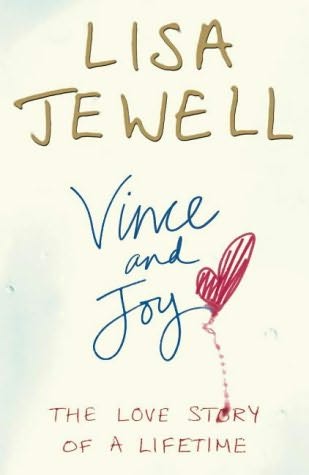
I personally found Vince and Joy to be the most frustrating of Jewell's novels. In short - and this section is going to contain spoilers - two people meet, and are perfect for each other. Due to a series of ridiculous misunderstandings, they remain apart for the next twenty years or so, having relationships and even children with other people, while continually catching glimpses of one another, but never saying anything. And then, eventually, finally they get together.

One of my pet hates is stories where every one except the main characters knows what's going to happen. Supporting cast, audience, everyone. And then, the entire story is basically waiting for the heroes to stop being idiots.

This is the main reason why I dislike Jewell's more straightforward love stories, like this and Thirtynothing, and even, to an extent, Ralph's Party. It's not so much 'will they, won't they' as 'get on with it already'.

Wednesday, 26 August 2009

In Which We Discuss A Friend of the Family

A Friend of the Family is the one novel that feels quite different from the rest of Jewell's style.

The friend in question is Gervase, an ageing rocker with a strange ability to empathise and see problems that people wouldn't normally confide in other people. The family is the Londons; mother, father and three boys, Tony, Sean and Ned. These boys each have their own problems - Tony feels that life has passed him by, and wonders how he went from being the catch to the chubby older brother. Ned just got back from three years in Australia with a crazy woman, and feels like he's fallen off the track at some point or another. He doesn't know where his life is going. And Sean, well Sean has it all - a best-selling novel and the fiancé of his dreams. Until, that is, he gets a bit more than he can handle.

It's hard to analyse why this is my favourite of Jewell's novels. It may be because it's less of a romantic comedy/drama, and more about a family. The point of it isn't to get the girl, it's to get the life (although in a few cases, the girl comes with it).

Perhaps it might help to compare it to my least favourite, Thirty-Nothing. What annoyed me about that was that I could very clearly see the ending from the first few pages. You've all seen or read stories like that, where absolutely everyone know who's going to get together, and it's just the very frustrating case of waiting for the two main characters to stop being idiots. That kind of scenario also shows up in Vince and Joy, and to some extent in Ralph's Party. While A Friend of the Family does include a bit of waiting for people to stop being idiots, at least Gervase is there to tell them that.

There's one element that did rather annoy me about the book. When one character becomes pregnant, she says that five years ago, she would have got an abortion. But, as an engaged woman in her early thirties, she doesn't have that option. Well, why not?

Later on, she also asks "Why would be propose if he didn't want babies?". Well, there are a number of responses to that - because he wanted to marry you being the most obvious.

Thursday, 20 August 2009

In Which We Discuss One Hit Wonder

Lisa Jewell's third novel, One Hit Wonder ties for favourite, in my opinion, with her fourth, A Friend of the Family. One Hit Wonder was published in 2001, while A Friend of the Family was published in 2004. Before and after those novels, Jewell released one novel a year.

One Hit Wonder focuses on the sister of one hit wonder, Bee Bearhorn, after her suicide. Bee's sister, Ana, never really knew Bee as an adult, due to a large age-gap and a complicated family.

Ana had an idea of Bee's life as being like Bee - loud, vibrant, and generally quite sparkly. The line that I feel really sums up Ana's mindset in the novel is as follows;

My sister, the one person who made being alive look any fun, killed herself.

Following Bee's death, Ana is sent to London to pack up her belongings. Once there, she meets Bee's friends, and start to find out more about her sister's life.

In Which We Discuss Thirtynothing

Lisa Jewell's second novel is probably my least favourite.

The storyline focuses on Dig and Nadine, two people who've been friends since secondary school, and who have just turned thirty(nothing). Despite everyone thinking they must be together, and despite having dated for the grand total of one day, they are emphatically not interested in each other.

You can see where this is going, right? So could I. From the very first page.

Then, the girl who broke Dig's heart, Delilah, shows up. Her disappearance was just as mysterious as her reappearance, so Dig tries to solve that mystery while falling for her over again. In the spirit of revenge/competition, Nadine calls her ex, Phil, and then shenanigans ensue.

I think I dislike this book because of it's predictability. The character's spend pages and pages obsessing over why they shouldn't do what we all know they will, and I find that very frustrating. Honestly, you want to just slap some sense into them.

This book doesn't involve as many people or links between them as Ralph's Party did, but it does delve deeply into the past, and how events there formed people's reactions today, a theme Jewell revisited in her later novels.

As I said, Thirtynothing is my least favourite of Jewell's novels, but it's still better than some by other authors.