Thursday, 11 March 2010

In Which We Discuss Last Week

I've decided to make the effort to write a weekly column (well, post, really) on what I've been reading.

Mostly, this was inspired by reading Nick Hornby's The Polysyllabic Spree, which I have, irritatingly enough, misplaced twenty pages from the end. How annoying is that?

The Polysyllabic Spree is a reprint of columns Hornby wrote for American literature magazine, The Believer. At the beginning of each one he lists the books he read that month and the books he bought, before going on to write down his thoughts on them.

It's kind of odd that I enjoyed the columns, despite Hornby and I having very different tastes. I like most of his books, sure - About A Boy, High Fidelity, and How to be Good come to mind - but, for instance, I've never gotten along with Dickens, which is one of his favourites. I also love sci-fi, which Hornby just cannot understand (really, he says that himself). In fact, I'm now determined to go check out Iain M. Banks' work at the library, based solely on a few paragraphs of Hornby's bafflement. Not at the fact of his bafflement, but because the bits he described seemed really, really interesting, and not baffling at all.

Oh, I've just spotted Hornby's latest book, Juliet, Naked on the pile at the end of my bed. That was one of the books I bought at the airport at New Years, on my way to Aberdeen.

Speaking of books I bought at New Years, I finally read that one by Derren Brown, Tricks of the Mind. I found it absolutely fascinating, and finished it over two days. I really couldn't put it down.

Tricks of the Mind
is basically about whatever Derren Brown felt like writing. It's aimed towards the general public, and contains a little information on his life, but a lot more information on memory tricks. Did you know, for instance, that in 2004, the final score of the FA Cup Final was Manchester United 3, Millwall 0? I am never going to forget that, after reading the following paragraph;

'04: M3, Millwall 0. Whore: mum, wall 0. Let's convert 'Millwall' into 'wall' to seperate it from the other Ms. Who's that whore? Why it's my own mother (God forgive me), stood against a wall, making nothing at all.


...makes me crack up everytime.

What he's done there is convert the information into words and formed those into an interesting image that you won't want to forget. '4' becomes 'whore' because it rhymes, while '3', using a slightly different number system, becomes an 'm' sound (because an m has three prongs). 'Man U' become M, Millwall is wall. The nil score isn't converted, because we can use it as it is.

That's only a very short overview of that system, but you had to know that much to understand that paragraph, which is the single funniest thing I've read all year.

The book also covers a little about hypnotism, and some of Derren Brown's feelings on mystics and mediums (he disapproves) among other things. It's fascinating if you're the sort of person who likes to know how things work (I only recently realised that some people don't - they're happy to enjoy something without identifying all the peices. How very odd).

I was hoping that that book would last me for the four hour bus journey down to Southampton, but since I finished it so quickly, I got started on the next one - rereading Maureen McCormick's Here's the Story: Surviving Marcia Brady and Finding My True Voice (incidentally, I managed to finish that on my journey down to the bus stop).

Maureen McCormick played the original Marcia Brady, and that's all most people know about her. I admit, I wanted the book simply because she was my favourite character. I didn't even realise she played Judy in Teen Angel, and I loved that show.

McCormick's a very interesting person, too. I think I would like to be her friend. I like how candid she is about her attraction to men, and the frank way in which she discusses her past drug problems. She still looks beautiful, too.

I like biographies. I'm not always in the mood for them, but it's always interesting reading about people's lives.

Maureen McCormick
did a cameo on Scrubs in 2003. I use a screenshot of that as one of my usericons on livejournal, but you can see the whole clip here, lucky blog readers.


I wonder what it was like for her, after being haunted by Marcia for so many years to say on TV "my name is Maureen McCormick", and then to be shushed? It doesn't seem to have been a big deal for her, but I find that it kind of sums up the influence Marcia has had on McCormick's public life.

Thursday, 4 March 2010

In Which We Discuss March 2010

A record of the books I've read this month;


Number Name Author Date Began Date Finished
1 Tricks of the MindDerren Brown


06/3/20107/3/2010

2 Here's the StoryMaureen McCormack


7/3/2010


8/3/2010


3 The Polysyllabic Spree


Nick Hornby


8/3/2010


17/3/2010
4 Nemi


Lisa Myhre


10/3/2010


10/3/2010


5 Smoke and MirrorsNeil Gaiman


2009


12/3/2010


6 Blind FaithBen Elton

15/3/2010


16/3/2010


7 Tent


Margaret Atwood


16/3/2010


18/3/2010


8 Popco


Scarlett Thomas


18/3/2010


22/3/2010
9 Bringing Down the House


Ben Mezrich


22/3/2010


26/3/2010
10 Light as a FeatherHelen Dunne

26/3/2010


27/3/2010


11 The Toymaker


Jeremy De Qiudt


27/3/2010


28/3/2010


12 Phone Sex


Miranda Austin


28/3/2010


29/3/2010
13 Dead Famous

Ben Elton

30/3/2010

31/3/2010

14 Songs of the Humpbacked WhaleJodi Picoult

31/3/2010

???


I'm going to split this into monthly posts, and then put it all together next year.

Annoyingly, I think I've missed a few between the 12th and 16th of the month.

Wednesday, 3 February 2010

In Which We Discuss February 2010

A record of the books I've read this month;


Number Name Author Date Began Date Finished
1 The Girl with Glass Feet
Ali Shaw

8/2/2010
10/2/2010
2 Misfile, volume 1


Chris Hazelton

10/2/2010
10/2/2010
3
Cadbury's Purple Reign

John Bradley

10/2/2010


1/6/2010
4 Misfile, volume 2
Chris Hazelton

10/2/2010

11/2/2010
5 Misfile, volume 3


Chris Hazelton

11/2/2010
11/2/2010
6 Misfile, volume 4
Chris Hazelton

11/2/2010
11/2/2010

7
Misfile, volume 5
Chris Hazelton

11/2/2010
11/2/2010

8
Misfile, volume 6


Chris Hazelton


11/2/2010


11/2/2010

9
Misfile, volume 7


Chris Hazelton


11/2/2010


12/2/2010

10
The Fairy Godmother
Mercedes Lackey


11/2/2010


13/2/2010

11
Misfile, volume 8Chris Hazelton


12/2/2010


12/2/2010

12
Misfile, volume 9Chris Hazelton


12/2/2010


12/2/2010

13
Misfile, volume 10
Chris Hazelton


12/2/2010


13/2/2010

14
The Wish List
Eoin Colfer


13/2/2010


14/2/2010

15
Misfile, volume 11
Chris Hazelton


12/2/2010


13/2/2010

16
The First Casualty
Ben Elton


14/2/2010


22/2/2010

17
Silver Birch, Blood Moon
Various; Edited by Ellen Datlow and Terri Windling


15/2/2010


17/2/2010

18
Black Thorn, White Rose
Various; Edited by Ellen Datlow and Terri Windling


17/2/201019/2/2010

19
One Good Knight
Mercedes Lackey


22/2/2010


23/2/2010

20


Inconceivable
Ben Elton


23/2/2010


25/2/2010

21


Save Karyn
Karyn Bosnak


25/2/2010


4/3/2010

22


Pet Sematary


Stephen King


28/2/2010


6/3/2010


I'm going to split this into monthly posts, and then put it all together next year.

Saturday, 23 January 2010

In Which We Discuss Kevin (Again)

Last night, I finished re-reading Lionel Shriver's We Need to Talk About Kevin. I first read this back in 2008, and wrote a very short review of it here.

The rest of this post is going to assume that you've read the novel too, and will discuss major spoilers. If you haven't, then look away now. If you don't think you will ever read it, I'm going to quote a blurb after this so you can make up your mind properly. If you're still with us after that, don't cry about being spoiled, k?


Nature or Nurture: What makes a monster?

Kevin Khatchadourian killed seven of his fellow high-school students, a cafeteria worker and a teacher, shortly before his sixteenth birthday. He is visited in prison by his mother, Eva, who narrates in a series of letters to her estranged husband Franklin the story of Kevin's upbringing.

A successful career woman, Eva is reluctant to forgo her independence and the life she shares with Franklin to become a mother. Once Kevin is born she experiences extreme alienation and dislike of Kevin as he grows up to become a spiteful and cruel child. When Kevin commits his murderous act, Eva fears that her own shortcomings may have shaped what her son has become. But how much is she to blame?


As I said in my other post, in my first reading, I found the narration flowery. It threw me out of the story at first, and although it is semi-justified by the fact that Eva does write for a living, and is quite well-educated, I still found it quite jarring. I suppose it's also justified by Kevin's skill with words - his English teacher describes his writing as worthy of Swift, and comments on his vocabulary - since there are quite a few hints about just how much Kevin has inherited from Eva.

I also found the narrative to move irritatingly slowly. I wanted to find out what happened when he was (three days from) sixteen, not about before he was born, or what he was like as a baby or a toddler. But, when I did find out precisely what had happened when he was sixteen, I understood the point. I realised (especially after this second read-through) that I'd missed the whole story.

One major strength this novel has is in characterisation. The characters which are mainly dealt with are those of Kevin and Eva. In a book of almost four hundred pages, they are on every single one of them. They seem real, believable, solid. In contrast, more secondary characters like Franklin and Celia seem almost two dimensional and flat. But then, that's the point - the point of the novel is to understand Kevin and Eva as individuals, and as they relate to each other. As Eva herself acknowledges, this isn't something that can be easily explained - it's best understood by piling up all those little moments and anecdotes which seem flimsy by themselves, in order to build up a stronger understanding. This is what Shriver does, masterfully, over the course of those four hundred pages. Reading the novel a second time, knowing what was coming, I could take my time to fully absorb this.

The twist at the end of the novel changes ones viewpoint of Eva. She's not just an incidental character; she's important. She's the one member of Kevin's family whom he decided not to kill. Reading it over again, it becomes more apparent that Eva and Kevin were too alike. He didn't come from nowhere - his traits can be traced back, through his mother, and through other members of his family. It's this single combination that's deadly.

I also suspect that my own growth has changed my viewpoint. I've gone from nineteen to twenty-one between the times I read this book, and I've discovered the concept of Childfree. While I'm beginning to suspect that I'm merely childless, and not childfree - I'm a fence-sitter - I whole heartedly agree with the idea that no one should be expected to have children, just because they can and it's what their parents did.

Knowing about the childfree also makes it easier to understand the way that a mother can simply not like her own child. Again, as Eva comments in the novel, getting pregnant - or rather, trying to - is like leaving a door open. You never know which stranger is going to walk in.

A lot of people talk about loving their children no matter who they are, and what they're like. Can that really be called love, that undiscriminating, unspecific affection? If it makes no difference what they're like, then could you not love a wall just as easily? I suspect that's the difference Kevin noticed between his parents. His father loved him because he was his son. His mother disliked him because he was Kevin. And, in the end, he showed very clearly that he preferred his mother to his father.

I don't think the book has any huge point or moral. I just think it portrays a fascinating relationship, and I found that I could appreciate that much better the second time.

Saturday, 16 January 2010

In Which We Discuss Downward to the Earth

This is a review I wrote several years ago, when I was first getting the hang of it. I've edited it slightly here, but I haven't bothered to rewrite it completely since I haven't read the book in several years. I've also cut the ending off because it was embarassingly fangirl-y and not very helpful.

Downward to the Earth is a sci-fi novel set in the distant future. The main character, Gunderson used to work as an administrator, on a planet called Belzagor. The main species on the planet are a race known as Nildoror, closely followed by Sulidoror. The Nildoror resemble elephants while the Sulidoror closely resemble apes, leading the first humans to encounter them to believe them to be an unintelligent species. It was during that time that Gunderson lived on Belzagor, when the Nildoror were used as beasts of burden. However, as they discovered soon enough, the Nildoror and Sulidoror are at least as intelligent as humanity, if not more so.

Feeling guilty now, over his part in that, and in various other things that took place at the time, such as his having inadvertently trespassed upon a ritual both Nildoror and Sulidoror view as sacred, Gunderson has returned, to discover what happened to his old friends, and what exactly the relationship between Nildoror and Sulidoror is, as well as to make amends, in the most dramatic, self-sacrificing way possible.

I found that this book drew me in immediately, and I literally could not put it down. Silverberg's writing is easy to follow and understand, and he is very good at describing the odd things that take place throughout the story.

It's a little too short and fast moving for my liking (but then, due to the speed at which I read, everything seems to move too fast), but the characters are believable, and realistic. The plot is absolutely amazing, and the philosophical overtones are fascinating. For instance, as I mentioned, the Nuldoror and Sulidoror were originally thought to be unintelligent, due to their appearance. Gunderson later discusses this with a Nildoror, describing elephants to him, and why, due to the physical similarities, they treated the Nildoror the way they did. The Nildoror raises the point that maybe it's not that the elephants are too unintelligent to communicate with humanity - perhaps it's humanity who lack the skills to communicate with elephants. A similar theme continues throughout the book.

To be honest, my descriptions can't do this book justice. It's not overly long, so there aren't as many twists and turns as in other books, yet the amount of depth achieved in that short space is incredible. Gunderson's choice is an incredible one. It's impossible to know if he's doing the right thing, or if he's doing it for the right reasons. Yes, he wants to make amends, but is this choice really the best way? He knows it's dangerous, and he's seen what happened to Kurtz, a former friend of his. Silverburg's writing allows the reader to feel as confused and unsure as Gunderson is.

The ending, and the results of the various decisions made is amazing. Like many sci-fi books, the ending was always in plain sight if you knew what you were looking for. Rather than being sprung on you, it grows logically, yet still manages to be a surprise.

In Which We Discuss Robert Silverberg

Warning; this post will contain spoilers for Nightwings and Downward to the Earth, especially if you've read one but not the other.

We've got that out of the way now? No one here who doesn't want to be? Good.

I finished Nightwings in a rush last night, and I found myself struck by how similar the ending was to that of Downward to the Earth.

In Downward to the Earth, the hero takes part in a ceremony which changes his body, and makes him one with the other creatures on the planet. There's also another character in whom the ritual fails, due to their own moral failings.

That's also how Nightwings ends. In Nightwings, there are actually two ceremonies - one called 'renewal', in which the body becomes physically younger, and another which involves joining together with the minds of the other beings on the planet.

I find it interesting that Silverberg has repeated this idea, of a physical change as a new beginning, and this goal of full, true, empathy between various - very different - people. In both cases, this change is difficult to attain, and those who want it most, for their own selfish reasons, fail, while those who seek true redemption succeed.

Just a thought.

Friday, 15 January 2010

In Which We Discuss SF Masterworks

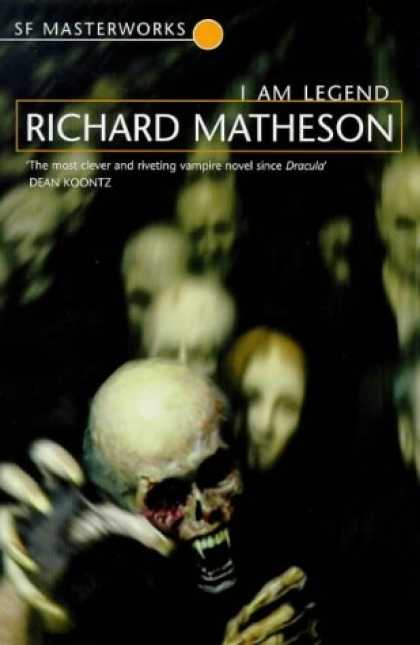
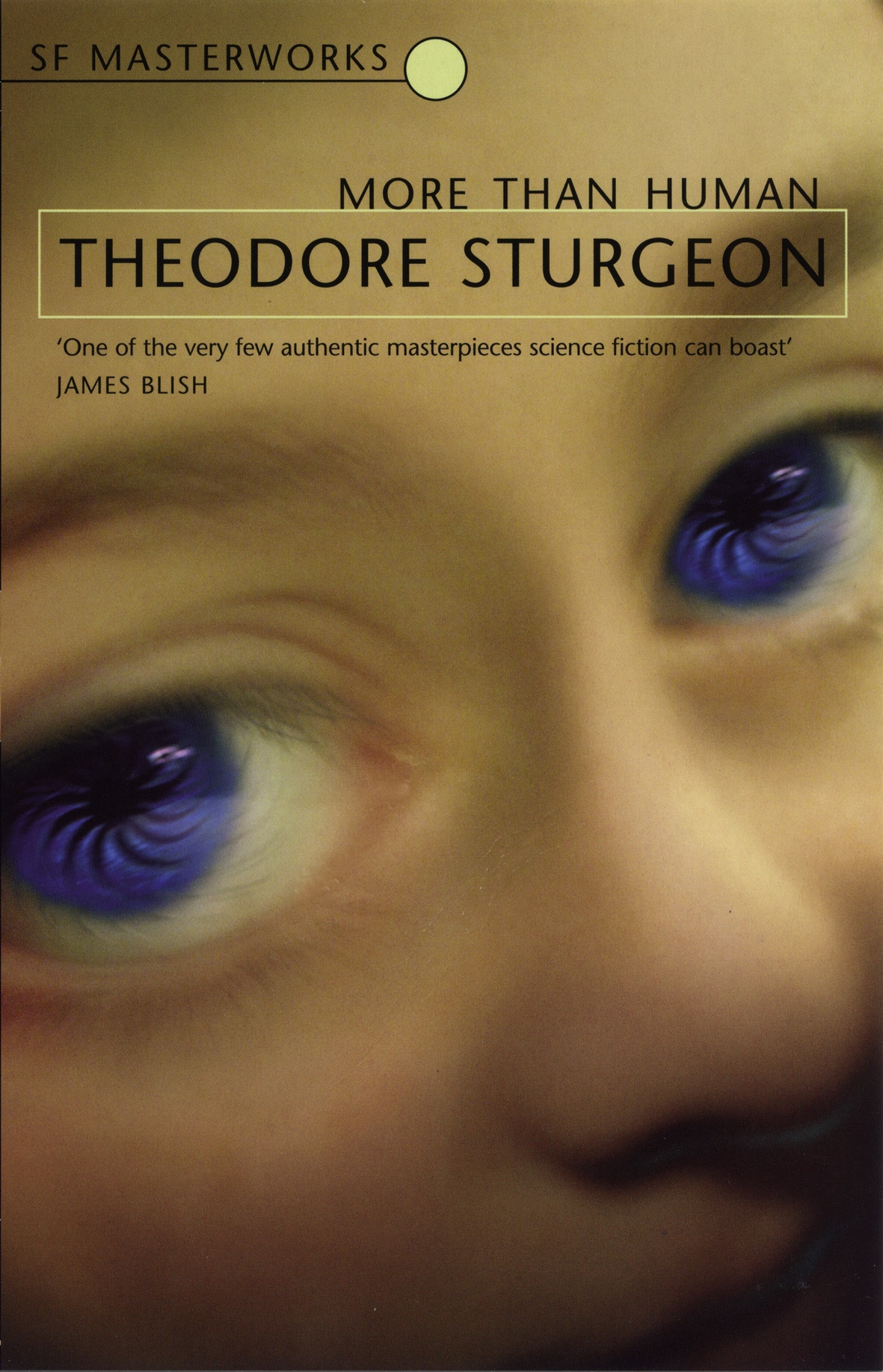
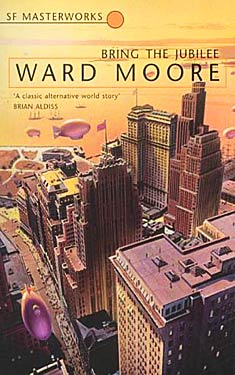
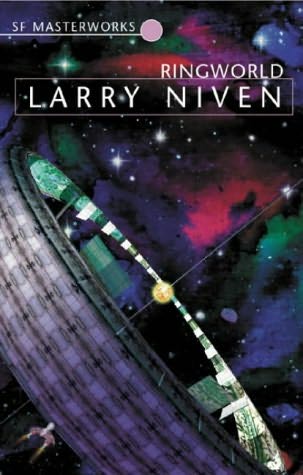
A list of the books in Gollancz' SF Masterworks series. I've included pictures of the covers of the ones I own.

This is the paperback list, although there's also a hardcover series.


Number Name Author Owned?
1 The Forever War Joe Haldeman
2 I Am Legend
Richard Matheson
3 Cities in Flight
James Blish
---
4 Do Androids Dream of Electric Sheep?
Philip K. Dick
5 The Stars My Destination
Alfred Bester
---
6 Babel-17
Samuel R. Delany
---
7 Lord of Light
Roger Zelazny
---
8 The Fifth Head of Cerberus
Gene Wolfe
---
9
Gateway

Frederik Pohl
10 The Rediscovery of Man
Cordwainer Smith
---
11 Last and First Men
Olaf Stapledon
12 Earth AbidesGeorge R. Stewart ---
13 Martian Time-Slip
Philip K. Dick
---
14 The Demolished Man
Alfred Bester
---
15 Stand on Zanzibar
John Brunner
---
16 The Dispossessed
Ursula K. Le Guin
---
17 The Drowned World
J. G. Ballard
---
18 The Sirens of Titan
Kurt Vonnegut
---
19 Emphyrio
Jack Vance
---
20 A Scanner Darkly
Philip K. Dick
21 Star Maker Olaf Stapledon---
22 Behold the Man
Michael Moorcock
23 The Book of Skulls
Robert Silverberg
24 The Time Machine and The War of the Worlds
H. G. Wells
25 Flowers for Algernon
Daniel Keyes
---
26 Ubik
Philip K. Dick

---
27 Timescape
Gregory Benford
28 More than Human Theodore Sturgeon
29 Man Plus Frederik Pohl
30 A Case of Conscience
James Blish
---
31 The Centauri Device
M. John Harrison
---
32 Dr Bloodmoney
Philip K. Dick


---
33 Non-Stop
Brian W. Aldiss
---
34 The Fountains of Paradise
Arthur C. Clarke
---
35 Pavane
Keith Roberts
36 Now Wait for Last Year
Philip K. Dick


---
37 Nova
Samuel R. Delany
---
38 First Men in the Moon
H. G. Wells
---
39 The City and the Stars
Arthur C. Clarke
40 Blood Music
Greg Bear
---
41 Jem

Frederik Pohl

---
42 Bring the Jubilee Ward Moore
43 Valis
Philip K. Dick


---
44 The Lathe of Heaven
Ursula K. Le Guin


---
45 The Complete RoderickJohn Sladek
46 Flow My Tears, the Policeman Said Philip K. Dick
47 The Invisible ManH. G. Wells---
48 GrassSheri S. Tepper
49
A Fall of Moondust

Arthur C. Clarke


---
50 Eon
Greg Bear


---
51 The Shrinking Man
Richard Matheson


---
52 The Three Stigmata of Palmar Eldritch
Philip K. Dick
---
53 The Dancers at the End of TimeMichael Moorcock
54 The Space Merchants Frederik Pohl and C. M. Kornbluth
55 Time Out of JointPhilip K. Dick
56 Downward to the EarthRobert Silverberg
57 The Simulacra Philip K. Dick
58 The Penultimate Truth
Philip K. Dick
59 Dying InsideRobert Silverberg---
60 RingworldLarry Niven
61 The Child GardenGeoff Ryman
62 Mission of Gravity
Hal Clement


---
63 A Maze of Death
Philip K. Dick


---
64 Tau Zeo
Poul Anderson


---
65
Rendezvous with Rama


Arthur C. Clarke


---
66 Life During Wartime
Lucius Shepard


---
67 Where Late the Sweet Birds Sang
Kate Wilhelm


---
68 Roadside Picnic
Arkady and Boris Strugatsky


---
69 Dark Benediction
Walter M. Miller Jr


---
70 Mockingbird
Walter Tevis


---
71 Dune
Frank Herbert


---
72 The Moon is a Harsh Mistress
Robert A. Heinlein


---
73 The Man in the High Castle
Philip K. Dick


---