Wednesday, 23 June 2010

In Which We Discuss The Tenth Circle

Warning; This Post Contains Spoilers for The Tenth Circle.

Daniel Stone is a perfectly nice, normal, suburban man. His wife is a college professor, so, as a comic book artist, he works from home and takes care of their daughter, Trixie, who is fourteen years old, and madly in love with her first boyfriend, Jason.

Or so her parents believe. Like most teenagers, Trixie needs her space, and her privacy, and to this end, has begun giving her parents information on a need-to-know basis. What they don't need to know is that she and Jason broke up. And Trixie will do anything to get him back.

So, she attends a party at her friend Zephyr's house, with the sole intention of flirting with everyone possible in order to make Jason jealous. This is one of those teenage parties where the soul objective is to 'hook up' with anyone or everyone. It's the kind of party where games like Rainbow are played. In Rainbow, each girl wears a different coloured lipstick, and gives oral sex to random guys. To put it crudely, the boy with the most decorated cock at the end of the evening wins.

Trixie isn't entirely comfortable with this, and drinks a little more than she intended to. By the end of the evening, she, Zephyr, Moss – Jason's friend, and Zephyr's love interest – and Jason end up playing strip poker. After a few awkward scenes, Zephyr and Moss end up upstairs, and Trixie is crying in Jason's arms in the living room. And that's when it happens. That's when he rapes her.

The news that Jason Underhill has been charged with rape sweeps through the small town. Jason is the golden boy, the star hockey player, the one with the bright and shining future, and a hockey scholarship just waiting for him.

Daniel Stone, Trixie's father, is furious. For years, since he met Trixie's mother, Laura, he's been trying to control his temper, and hide his past. Trixie has no idea that the gentle father she knows was once a dangerous rebel, that her mother was attracted to him solely because of the danger. Daniel's fear of becoming someone he doesn't want to be, of his daughter not recognising that person, comes through in his artwork, some of which is shown at the start of every chapter.

Daniel is currently working on a comic book called The Tenth Circle, loosely based on Dante's Inferno, which his wife has always been interested in. Dante's Inferno describes the nine levels of Hell, and similarly, Daniel's comic shows his main character, Duncan, traversing those nine circles of Hell in order to rescue his daughter ('Tracey'). When afraid or in danger, Duncan will turn into some kind of animal, in order to escape or defend himself. He has no control over this, and he knows that each time it happens he becomes a little less human. His one fear, like Daniel's, is that he will become someone his daughter will no longer recognise.

The theme of what Dante considers to be a sin is also something that is focused on in the plot. The first circle of hell, according to Dante, is reserved for those who did not believe in or worship their god. The second circle is reserved for adulterers and those who were overcome by lust, the third is for gluttons, the fourth is for the avaricious and the miserly who hoarded possessions, and the prodigal, who squandered them. The fifth circle is reserved for the wrathful, and sullen or slothful. In Picoult's interpretation, then, the first five circles are for those whose own desires were foremost to them, who only harmed or betrayed others as a side effect, not as their main intention. The sixth circle is for the heretics, while the seventh is for the violent, those who committed suicide, the profligate, and those who were violent against god, nature or art. Those two are for people who harmed other people or themselves intentionally through indulging their own desires. The eighth circle is for those who deliberately and knowingly committed evil; corrupt politicians and church officials, false prophets, seducers, thieves, and various falsifiers. The ninth circle is reserved for those who committed the worst crimes – the traitors. Cain, Antenor, Ptolemy, Judas, and Lucifer himself, the ultimate traitor.

Daniel somewhat agrees with Dante's classification of sins, with giving in to your own desires but intending harm as the least, and betraying a loved one the worst. But it's what he, and his character, find in the tenth circle of hell, something Dante never wrote about, which serves as the culmination of this theme. Laura considers this, too. Who worse to betray than a loved one?

Laura Stone, is wracked with guilt over what happened to Trixie. She has been conducting an extra-marital affair, which is why she wasn't at home or answering her phone that night. She was breaking it off, but that doesn't make her feel any better for being with him when she should have been with her daughter, especially when she discovers that Daniel knew, or rather suspected, before she told him, anyway.

Trixie Stone has taken to inflicting physical pain on herself in order to forget her mental and emotional pain. She's also become more interested in Daniel's past. He grew up in Alaska, in an Inuit village. Picoult takes this opportunity to examine the culture of the Eskimo people, in much the same way as she did the Amish in Plain Truth, although not to such an extent.

The book is written completely in third person. Picoult uses a similar style to Terry Pratchett to zoom-in on a certain characters thoughts, which leads to something interesting. Jason is convinced that Trixie is just trying to take revenge on him. Because he didn't rape her. They had sex, but he honestly believes that it was, in no way, rape. But Trixie believes that it was. And these characters can't talk to each other for all sorts of medical and legal reasons. They each assume that the other is lying, although the reader can see that the truth is far more complicated than that.

Still, as the trial gets closer, things start to heat up. Trixie is victimized by her classmates, who either believes that she's making it up, or assume that being raped makes her a 'whore'. One girl tells her "I wish Jason Underhill would rape me".

Things aren't going so easy for Jason, either. Although most of the class on his side, he's confined to his home for legal reasons. Trixie's father is after him. And he loses his hockey scholarship. Jason becomes more and more depressed, which leads to a somewhat surprising turn of events.

The Tenth Circle is both gripping and absorbing. I read it in one night, unable to put it down. Since it's in third person, it's impossible to get as close to the characters as in, for instance, My Sister's Keeper, which was told entirely in the first person. Still, the characters are far more dramatic, and the inclusion of the Inuit culture makes it a lot more interesting. The comic book, which is shown between chapters, a device used similarly in Sheri S. Tepper's Gate To Woman's Country (although that was a play, not a comic book), is pretty good quality, although fairly short for a comic book. As an extra, letters are hidden within the pages of the artwork, revealing a quote, which Picoult feels, sums up the novel.

In Which We Discuss The Space Merchants

In a world taken over by advertising, where a vote has more weight depending on the wealth of the person who cast it, nations only exist in order for trade to take place, and the Earth is almost used up, what's an adman to do?

Mitch Courtenay works for Fowler-Schocken associates, one of the more powerful PR companies in the futuristic world he inhabits. At one point, Mitch describes exactly how powerful they are to Jack O'Shea, an astronaut who insists that he doesn't fall for it.

All of Jack's clothes and luggage are Starr brand, the brand sold by Fowler-Schocken. Jack threatens to go straight home and throw his luggage away, replacing it with that of their rivals. Mitch doesn't doubt this, but he explains that the power of their advertisements means that Starr are viewed as the best. Although Jack may put up with his second rate luggage for a while, he'll start to notice problems, and one day, with an odd sort of amnesia relating to this conversation, he'll replace it all with Starr brand; the brand that's seen as more successful, more virile, and just better, all due to Fowler-Schocken. Jack doesn't disagree.

Later on, another example of this is shown. The Earth is slowly running out of it's natural resources, and things like real roast beef and coffee are expensive and difficult-to-obtain delights. Instead there is Coffiest, a cheap replacement which contains a small amount of an addictive drug. Completely legal, this will result in an addiction to the product in anyone who drinks it for any length of time. Another element of this is association. When someone drinks Popsie (something equivalent to a soft drink, apparently), they will crave Starr cigarettes. The cigarettes will spark a craving for a kind of confectionery. And the sweets will lead you right back to Popsie.

Because of all this, Fowler-Schocken are so powerful that they've been given what is possibly an advertisers ultimate coup - the rights to attract colonists to Venus.

Venus is, at first, an incredibly inhospitable planet. The first colonists will have to live in severe discomfort for generations, while the planet is terraformed, and Mitch's job is to make this concept seem attractive.

This job isn't easy, though. Although Mitch uses all the tools available to him - rumours, posters, subliminal adverts, rhymes, gossip, and more traditional techniques - he has other things to worry about. Like his companies rivals, who've been known to kill men for less. Like the Consies.

Consies are conservationists, and, in this world, they are akin to terrorists. Most people can't even comprehend the ideals that Consies believe in. After all, who cares if the topsoil of the Earth is destroyed? It can be replaced. Who cares if roast beef is now expensive? Chicken Little is cheap. Even the people who study the consies in order to avoid attacks and demonstrations don't understand them.

Speaking of Chicken Little, it's a cheap and ingenious replacement for other kinds of meat (along with soya substitutes). Chicken Little is a mass of living tissue around a heart. Keeping it fed with all the nutrients it needs and slicing off the meat which is ready is a dangerous job (although still safer than working in todays meat packing plants), and recruitment for it is akin to press-ganging with a touch of debtors hell to keep them there.

The book is told entirely in first person, and so a major focus of the book is Mitch's complicated and changing relationship with his wife and his boss, the owner of Fowler-Schocken, who could be said to think of Mitch as equivalent to a son.

The book is written by joint others, Frederik Pohl and Cyril M. Kornbluth. This is relatively uncommon, for two authors to work together, although for Pohl and Kornbluth, it seems they worked together extremely well. They did so often, anyway. Unlike the Neil Gaimen/Terry Pratchett joint work, Good Omens, where, in the first few chapters at least, there was a clear difference between the two writing styles, Pohl and Kornbluth manage to create an invisible seam. Unfortunately, due to Kornbluth's tragically early death at the age of 36, the sequel to this book was written by Pohl alone. It'll be interesting to see how he manages it.

Although the book was written in 1952, there's a clear correlation between the events an the world shown in the book, and that of the film Fast Food Nation. Both contain an adman in a corrupt business, with conservations threatened and persecuted. The link obviously isn't intentional, but it's an odd and slightly scary coincidence.

In summary, I loved The Space Merchants. Pohl and Kornbluth are both masters of the sci-fi genre. The book is fairly short, but manages to get a good amount of plot into the space. The changes in Mitch's character are dramatic but perfectly logical and believable, and the book is way ahead of it's time, with it's discussion of issues which are only now beginning to achieve mainstream importance, such as the conservation of natural resources, and overpopulation.

In Which We Discuss the Midnight Club

Most of Christopher Pike's teen horror books are good in their own way, easily some of the best in the genre. But this is something else. This isn't really a horror story. It's more spiritual and supernatural.

The story focuses on a group of teenagers in a youth hospice. All of them are dying. They start meeting in the club room every night at midnight and telling each other stories.

The stories within the stories are good in their own right. Having read some of Christopher Pike's short stories, it's obvious that he hasn't skimped on these, despite them being merely stories within a story.

The most important part of the plot, however, is the 'real' story if you will, the way all the characters tie together. Christopher Pike's normal views on spirituality are shown in this book, as in many of his others, and, as always, it's effective. Despite this being aimed at teenagers there's a depth and a sense of serious tragedy to it that isn't found in many books. Unfortunately, due to the audience the book is aimed at, the brevity and lack of depth given to some of the more interesting issues and ideas can be a little frustrating. This book is deeper than a normal teen book, but it's not as in depth as it would be had it been written for an older audience.

Although this book is technically classed as a horror, it's not all that scary. The main story is more supernatural than horrible. As I mentioned, every single character is dying. How each character got their illness, the way in which this is revealed and their subsequent endings (sometimes death) is dealt with with a delicacy and sweetness that is capable of reducing a person to tears.

This book is one of those that will leave you thinking. It's not really big, or important. It's not all that long, and I doubt it will ever be as famous as some others. It's just a simple little story. But maybe that's why it's so effective.

In Which We Discuss Vamped

Marty Kowalski is bored out of his skull. This shouldn't be surprising – he is over two hundred years old.

Marty became a vampire in the midst of World War II. In the years since then, since the vampires joined with the prostitutes and allied with the church, the ranks of the vampires have grown, to the point where human beings are almost non-existent. Vampires no longer need to hunt; blood is grown through stem cell research, and sold like coke or any other popular drink. It even has various additives; one brand of blood is the equivalent of tea, and is designed to taste as if the victim died peacefully. Another brand, the equivalent of a sports drink, has added adrenaline (incidentally, more than three times enough to give someone a heart attack), supposedly to taste like the blood of someone who died screaming. With no need to hunt anymore, vampires have gone back to their day jobs, and most of them accept the status quo. Marty, however, one of the first vampires, remembers that "lab-grown [blood] versus the real thing is like Tang next to fresh-squeezed", and is suffering a kind of vampire midlife crisis. Vampires don't have midlives, of course, but many seem to fall under the spell of this kind of ennui around the time they should have died.

Marty has begun playing fast and loose with his own health, such as it is. He drives recklessly, and has already removed his seatbelts and airbags. He doesn't go out in the daylight; in this world, vampires are physically incapable of being awake in daylight hours, although they can be burnt by sunlight. He has no problems with garlic, and of course vampires have reflections – how else did Dracula get that parting so straight? Marty reflects all the time; in mirrors. In chrome. In his lonelier moments.

So when Marty runs into Isuzu, a young, fresh little refugee from the human farms made to cater for rich vampires, he's pleased. Knowing just how rare she is, he decides not to kill her at first. No. He'll wait. Besides, right now she's just stopped being scared and stale adrenaline has an odd aftertaste. Better to wait and scare her fresh when he's ready.

The problem with delayed gratification is, of course, the delay. Marty needs to take care of this little six-year-old human, at least for a time. So he does. Just for a little while.

But then he starts to realize; maybe the warmth and humour a child has will be more interesting than a quick kill. Maybe looking after her properly will be more rewarding then just killing her.

And so, just like that, Marty becomes a father. Vampires can't have their own children, partly because vampires don't age, and many of them miss at least this aspect of mortality. There are programs such as "Little Bobby", which focus on human children growing up, which are very popular. This doesn't mean, however, that one of Marty's neighbors wouldn't snap Isuzu in two without a second thought. So, her existence must be kept secret. Then there's the fact that human food isn't sold anymore, except as artifacts on e-bay. And, luckily, as pet food. After the change, most human food was simply relabeled, and all the animals meant for human consumption were simply used for pets. Medicine, on the other hand, is a little harder to get ahold of.

And so, Isuzu and Marty begin adjusting to each other. The book is told in first person, from Marty's point of view, and much of it focuses on his reaction to becoming a father. Surprisingly, most of the issues he comes across are somewhat normal and human, even in the unusual situation. Of course, it's the unusual, vampire only concerns, which keep the book fresh, and prevent it from being just another fatherhood story. Although the fatherhood part of the book is surprisingly touching and real.

Although the Marty-Isuzu pairing may sound reminiscent of Lestat, Louis and Claudia, nothing could be further from the truth. Somehow, Sosnowski manages to keep the vampiric elements of the story on the right side of believable without delving too far into fantasy or horror, despite the subject matter.

Sosnowski effortlessly slips between present day and back-story, linking Marty's relationship with his parents and his own youth, with his efforts to keep Isuzu safe and happy. Sosnowski's droll wit and rhythmic writing style, and the unique and believable alternate world he has created are interesting and absorbing, making the book a pleasure to read.

In summary, Vamped manages to remain sweet, touching and, in places, funny, without allowing the fantasy elements to overwhelm it.

In Which We Discuss Things That Were

Was is an interesting novel. It reminded me, more than anything, of Karen Wallace's Wendy, a book which re-writes the events of Peter Pan as if they were a metaphor for a far worse situation.

Was focuses mostly on the life of Dorothy Gael (sic). After the death of her parents she is sent to live with her aunt and uncle, Henry and Emma Gulch. Her life with them is not at all easy or pleasant, and, like many children in such situations, she has nowhere to turn, having gained a reputation as a liar. She does, indeed, lie constantly, to herself and others. It is the only way she can cope with her life as it is (much like Jean Ure's Bad Alice).

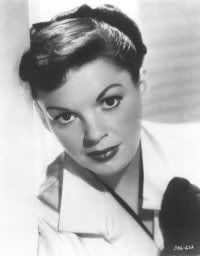
There are, however, two other main strands of the plot. The shorter one focuses on Frances Ethel Gumm (a name film buffs may know, although she became famous under a very different pseudonym). Her section is very short, comparatively; perhaps because this character is, in fact, a real, incredibly well known person, and so artistic liberties cannot be taken to such an extent as with the other characters.


Frances Gumm


The third character is Jonathan, a gay actor dying of Aids. As he grows older he has become more and more obsessed with collecting and photographing the past - old buildings that still stand, and places where people he admires have lived.

Each of these three people were greatly affected by L. Frank Baum's Wizard of Oz. Dorothy did not see the film until the very end of her life; Frances experienced it during her late teens; and Jonathan was brought up on it, falling in love with the story and its origins. Eventually, events come full circle, which I found very effective.

I haven't seen the film in years, and I'm sure someone who knows it well may have picked up references and ideas that I didn't. The writing is good, and the plot is amazing. I really couldn't put this down - I almost got in trouble at work reading it. The idea behind it is brilliant, and fairly original.

To be honest, I really can't find the words to describe this book. The characters are touching and believable, and although the ending could have been horrible and tragic, Geoff Ryman went down the other route, giving the most satisfying (although not happy) ending possible. The addition of a end note detailing exactly which bits were based on reality was a helpful addition, as the book is very plausible.

All in all, it's a book with great depth, that leaves you with a great deal to think about. It's a fairly long book, and not for everyone. Still, it's amazing.

In Which We Discuss Wedded Blitz

Tina Reilly is one of my favourite authors, based purely on the book Is This Love?. Unfortunately, not one of her other books is quite as good, in my opinion, as that one.

Wedded Blitz is the story of a couple whose marriage has fallen apart. The reason for it is cliched (their son died and they were unable to communicate and deal with their grief), and there is nothing original or exciting about the way it is handled in this book. There are very few twists and turns in this book that are not obvious beforehand, and those that do surprise you seem tacked on and forced. The subplots involved, such as the wife's business suffering and her efforts to save it, and the husband's friend dealing with unexpected fatherhood are far more interesting than the main plot, which, frankly is not saying much.

All in all, not her best work. Tina Reilly is not a bad author, but her recent books are very disappointing.

In Which We Discuss The Devil Wears Prada

When Andrea (Andy) Sachs takes on a job in fashion – telling herself it's only a stepping stone to her dream job at the New Yorker – she takes on more than she bargained for. Her boss, Miranda Priestly, is the most influential person in fashion, and, Andrea is convinced, the Devil incarnate. Every day, as Miranda's personal assistant, Andrea is asked to achieve the impossible, and, once she manages it, it's added to her list of daily duties.

It's said that working for Miranda for a year – and not getting fired – can guarantee you a job almost anywhere you like, and trusting in this, Andrea begins counting down the days. Her boyfriend, Alex, and her best friend Lily, and even her parents, are unable to understand how important this is to her, and how strict Miranda is. Too rushed off her feet to find time to explain, Andrea finds her relationships with everyone close to her suffering.

One area in which the novel suffers is in characterization. Miranda Priestly, the boss from hell, is a masterpiece. You really do hate her, and since that is her role in the novel, since that's the whole idea behind her existence, then it works great. But there are very few likable characters in the novel. Christian Collinsworth, who plays the role of Andy's knight in shining armour, her apple in Eden, is smarmy, arrogant, and selfish. Andy's boyfriend, Alex, is moralistic preacher figure, and although I'm sure he's a lovely person, he's not someone I'd enjoy spending time with. Andy's best friend, Lily, is equally selfish. Every character in the novel goes on and on about Andy's neglecting them, yet not one of them attempts to understand how difficult her life and her job is, or even help her hold on to her sanity for the year she needs to spend there.

The book is told in first person, and so the main character the reader gets to know is Andy herself. Andy is something of a hypocritical snob, yet manages to be the most likable character in the book. This speaks volumes.

Lauren Weisberger writes in a very gossipy style, and it's rumored that the book is a roman à clef about Vogue magazine, with the character of Miranda Priestly based on the editor of the aforementioned magazine, Anna Wintour. Although Weisberger denies that this is true, that's said to be the defining factor that propelled the book up the bestseller lists.

Perhaps not entirely unexpected in a book whose title contains the word "devil" religion is something of a subliminal theme. Andrea is Jewish, as was Miranda Priestly before she changed her name, became the editor of Runway, and stopped writing home. Andrea's Jewish friends Alex Fineman and Lily Goodwin, find themselves neglected in favour of Miranda Priestly, and Christian Collinsworth as the book progresses, as if Andrea is turning her back on everything she knows, in this case, religion, and following the same path Miranda once did.

The ending suffers, and greatly degrades the rest of the book. It's almost heavily moralistic, and very clichéd.

In summary, a fairly interesting novel, far too weighed down by its morals and unlikable characters.