Sunday, 19 May 2019

In Which We Discuss War & Peace, Part 3, Chapter 7

Chapter 7


We're back at war, where Nikolai Rostov is very happy to receive a note from Darling Bory, telling him that Bory is ten miles away and that he has a letter and some money for him, since he's now in debt to everyone around him, what with celebrating their victory.  He sets off on a horse he's bought from a Cossack in his shabby old cadet clothes, since he's not yet bought new ones.  He's quite pleased about this, since it makes him look like he's been in the wars, which, of course, he has.  Bory's regiment, the Guads, have had a very easy go of it, and have treated their whole march "as if on a pleasure trip".  They've had dinners, knapsacks carried on carts, and have entered and left towns with their bands playing.  Darling Bory has been making many useful contacts.  Truly, he is his mother's son.


Among others, he's now met Andrew Bolkonski, through a letter of recommendation by Pierre.  It was Bolkonski who delivered Nikolai's letter.  He also has a friend, called Berg, who is German and has become a captain along the way.  Rostov arrives while they're playing chess.  Nikolai knows Berg, so maybe he was at the drunken bear party too.  Nikolai wants to greet Bory in an unusual way, since they're such close friends, but no one's invented fancy handshakes or the bro-hug yet so he just lets Bory kiss him a few times, as per the usual greeting in Russia at the time.


Both of them want to show off how much they've changed in the last six months.  Rostov shows off his manly, mud-splattered trousers and wounded arm, while Darling Bory talks about the splendid march he's had alongside His Imperial Highness the Emperor Alexander, and how gracious the Tsarevich was.  Finally, Darling Bory hands over the letter, and Nikolai begins sending angry glances at Berg as he reads it.  Eventually, he asks him to leave, as he obviously should do when someone receives a personal letter from home and is reading it in front of their childhood friend.  Berg takes the unsubtle hint.

As soon as he leaves, Nikolai starts berating himself for not having written to his family sooner, and having left them so worried.  Darling Bory fetches wine while Nikolai scoffs at a letter of recommendation to Bagration that his mother has obtained.  Darling Bory asks why on earth he's not making use of it -


- and Nikolai says he won't be anyone's lackey.  They call Berg back, because he'll drink and Darling Bory won't.  Got to keep a nice clear head for all that social climbing.  They exchange a bit of gossip, the most enjoyable of which is that the Grand Duke/Tsarevich's favourite expression of annoyance is "Arnauts".  That works in English too.


Rostov tells his war stories "just as those who have taken part in a battle generally do describe it, that is, as they would like it to have been, as they have heard it described by others, and as sounds well, but not at all like it really was".  He doesn't mean to lie, but he also knows that there's a way this story go, and his absolutely true account would be met with looks of bafflement or assumptions that he'd done something wrong somewhere.  Prince Andrew turns up as Nikolai is describing the frenzy of his attack, as opposed to describing falling off his horse and running away from a French officer.  He's unimpressed by Rostov, a mere 'hussar of the line', and had been hoping to meet Darling Bory alone.  Everyone in the room can sense this, and Rostov goes red and gradually falls silent.  He's angry that Prince Andrew - who has never seen battle - would be so condescending.  He tells Prince Andrew off, but Prince Andrew outright refuses to accept him, and tells him no insult has been given or received.  It is very hard to describe.  Rostov has a lot of staircase thoughts after this, and considers going to confront Prince Andrew at headquarters and telling him off with a pistol in his hand, but also, he really wants to be friends with him.


Saturday, 18 May 2019

In Which We Discuss War & Peace, Part 3, Chapter 6

Chapter 6


For Chapter 6, we're in the Rostov household.  Nikolai Rostov - this translation calls him Nicholas, but I'm sticking with Nikolai to avoid confusion with the old Prince - was injured in book 2, you may recall.  He was one of the young men at the party with the bear in book 1, I think.  Anyway, his father, the Count, has just received a letter from him.  Anna Mikhaylovna, Darling Bory's mother, who organised the party at which Pierre was told he'd proposed to Helene, is still staying with them.  Nikolai - his father calls him Nikolenka, which is cute - has been injured, as we know, and promoted to officer, which I'm not sure we'd heard about before.  They've not told Natasha, Nikolai's sister, yet, but she knows somethings up and, later, begs Anna to tell her.  Anna does so, asking Natasha not to tell her mother.  What's that phrase?  Two can keep a secret so long as one of them is dead?

Well, Natasha doesn't tell her mother, she tells Sonya, who I think is her cousin, and who I know had a thing with Nikolai before he went off to war.  Petya, Nikolai and Natasha's 9-year-old brother, decides to tell them how much better he would have done in handling the news, and if he'd been in Nikolai's position.  What an armchair strategist.

Natasha asks Sonya if she remembers every detail of Nikolai, confessing that she can't remember Darling Bory very well.  His mother would be shocked.  Sonya is also shocked, and tells Natasha that she could never forget Nikolai - she loves him.


(My little joke there is that that gif is from Shadow Hearts II, which has a Russian character named Nikolai, but there weren't any gifs of him because it's not a very famous game.  Also Nikolai loved Karin, but fuck Karin, she knows what she did).

Natasha knows she's never been in love like Sonya is, which is understandable because she's, what, thirteen?  Sonya says she'll write to Nikolai if he writes to her, and Natasha asks, won't she be ashamed?  Natasha would be ashamed to write to Darling Bory, and Petya insists that that's because, since she last saw Darling Bory, she fell in love with Pierre, and then with her Italian singing master.

While all this has been happening, Anna has told their mother, so that secret turned out not to be a big deal at all.  They read the letter together, and Nikolai sends his love to Sonya.  Over the next few days, lots of people come to read the letter, and the countess is filled with pride at the thought of her little baby boy being a grown-up officer.  He was her first child, so every single stage of his growth seemed impossible and miraculous.  I get that.  How is it possible to just...make a person?   And they grow inside of you and then outside of you, and become proper people and adults?  It all seems very strange to me.  Also, we learn that Nikolai's first words were 'pear' and 'granny', which seem like odd choices.  Along with reading the letter to people, the household has been busy writing back and collecting all the money and equipment Nikolai needs to be an officer.  I always assumed that sort of thing was provided, which is probably quite a modern perspective.  They don't have an address for Nikolai, so they send the letters and money to Darling Bory, assuming that the Grand Duke's office is probably somewhere quite close to the Pavlograd regiment.  I feel like this might end in disaster.


Friday, 17 May 2019

In Which We Discuss War & Peace, Part 3, Chapter 5

Chapter 5


The last chapter ended with Maria thinking she was the Beast and Anatole was the Beauty would see past her exterior, truly love her, and be rewarded with her fortune.  Meanwhile, her poor French companion, Mademoiselle Amelie Bourienne thought she was in Cinderella and Anatole was the handsome prince who would recognise that she was so much more lovely and deserving than a rich Russian heiress and pluck her from obscurity.  Meanwhile, Anatole was thinking about marrying Maria and having an affair with Amelie.  He falls asleep immediately, happy with his world, while everyone else lies awake.


Maria is thinking of how kind Anatole is, in awe of the idea that he will be her husband.  She gets spooked, becomes convince that a devil in sitting in the corner and calls for a maid to sleep in her room.  Amelie is walking up and down the conservatory, practicing imaginary conversations.  Lise - Prince Andrew's wife - is finding her bed uncomfortable, which might have something to do with her pregnancy, and definitely has something to do with being reminded of when she was young and light and free and not growing a new person while her husband plays soldiers.  Meanwhile, Prince Nicholas is angrily pacing up and down, feeling insulted on his daughter's behalf.  He's mad that she was so eager to leave him that she dressed herself up and acted in a way unlike herself, especially when Anatole was clearly making eyes at Amelie.  He's going to get rid of her.  I hope he also gets rid of Anatole.  He thinks his daughter has no pride, and is offended that she doesn't at least have pride on his behalf.


The next day, Maria goes to her father's study as usual, and Anatole and Amelie meet in the conservatory, being in unspoken agreement as far as the first act of their romance (but not the part where he marries someone else for money).  Prince Nicholas tells Maria of Anatole's proposal.  He starts off trying to be nice but quickly loses his temper, and, to be far, I don't think he's ever held it for more than a minute at a time before.  Maria knows that her father doesn't approve, but also realises that this is a moment to decide her fate.  She begins to explain that she wishes to follow her father's will, but if she did express her own desire....Prince Nicholas predicts her answer, and spells Anatole's plan out to her - that he will marry Maria for money, but keep Amelie as his lover.  He takes it back when he sees she's close to tears and tells her he was only joking, and she has the right to choose since her life's happiness rests on the decision.  He knows she'll pray over it, but he hopes she'll think as well.  He gives her an hour.

Maria wanders off, glad that she can choose to marry Anatole, but still hurt by her father's claims about Amelie.  She wanders into the conservatory, and is only roused from her own thoughts when she hears Amelie's voice.  She turns a corner and catches them embracing.  Amelie screams, presumably in embarrassment, and runs away.  When Tikhon - basically the butler - goes to fetch Maria for her answer, he finds her comforting Amelie, who is sobbing and apologising.  Maria tells her that she loves Amelie more than ever and that she understands.  I really hope she's about to tell Anatole to fuck off.


Both Prince Vasili and Prince Nicholas are waiting for her answer.  Prince Vasili repeats the proposal, with lots of flowery compliments.  Prince Nicholas demands a yes or no answer, and also shouts that he reserves the right to state his own opinion.

SHE SAYS HER DESIRE IS TO NEVER LEAVE HER FATHER OR MARRY!


I'm not sure if I've mentioned this before, but I do type these posts in real time as I read.  Sometimes I'll scroll back up and edit, if I realise I've mixed two characters up or spelt a name wrong, but otherwise it's just a stream of real-time consciousness.

Prince Vasili begs for just a little bit of hope, and Maria insists that she will never be Anatole's wife.  I like her so much more now.  Prince Nicholas announces that he is pleased to have seen Vasili and embraces him, which is perhaps the most diplomatic thing I've seen him do in the whole book.  He wants this money-grubbing man out of his house.

Maria keeps talking, and says she will do everything she can to arrange Amelie's happiness, since she's accepted her own fate as the ugly spinster daughter.  She outright states that if Anatole is not rich she will make him so and for god's sake Maria, shut the fuck up.


The chapter ends there, before we can see Vasili's reaction.

Thursday, 16 May 2019

In Which We Discuss War & Peace, Part 3, Chapters 3 and 4

Chapter 3

We're now back at Bald Hills, the home of old Prince Nicholas Bolkonski, father of Prince Andrew Bolkonski.  I've had to go back and look at my notes from the end of book 1 to remember who's here.  Prince Andrew's pregnant wife is - I'd actually forgotten he had a pregnant wife waiting back home, but, to be fair, he didn't think of her once in the whole of book 2.  So is Prince Andrew's sister, Mary or Maria.  She's the pious one I wanted to slap because she snottily insisted on rereading the bible instead of reading another book.  I did like old Prince Nicholas though - he thinks the only evils are idleness and superstition, and the only virtues are activity and intelligence.  God only knows how he ended up with a daughter like Mary.


Prince Nicholas has received a letter from Prince Vasili, announcing his visit and the fact that he's bringing Anatole, and Prince Andrew's wife drily remarks that they certainly don't need to go finding suitors for Maria when they just invite themselves.   The old Prince is not at all impressed by Vasili's sudden and meteoric rise to power and wealth, and he likes him even less when he reads between the lines and realises that Vasili is proposing that Anatole marry Maria.  Old Prince Nicholas is certainly not a big dumb kitten.

On the day that Vasili et al are expected to arrive, the road is blocked by snow.  The old Prince goes out to see if it's cleared, but is greatly offended when his servants believe he want it cleared so 'the minister' (prince Vasili) can come in rather than so his daughter can go out.  He is grumpy all day, and calls his daughter "fool...or dummy!", which cheers me up a bit.   She's come to cheer him up with her companion, Mademoiselle Bourienne.  Prince Andrew's wife - the little princess, as the narrative calls her - has heard the old prince is in a bad mood and is hiding.  It's probably the right idea, since he throws his plate at the wall as soon as anyone dares talk to him.

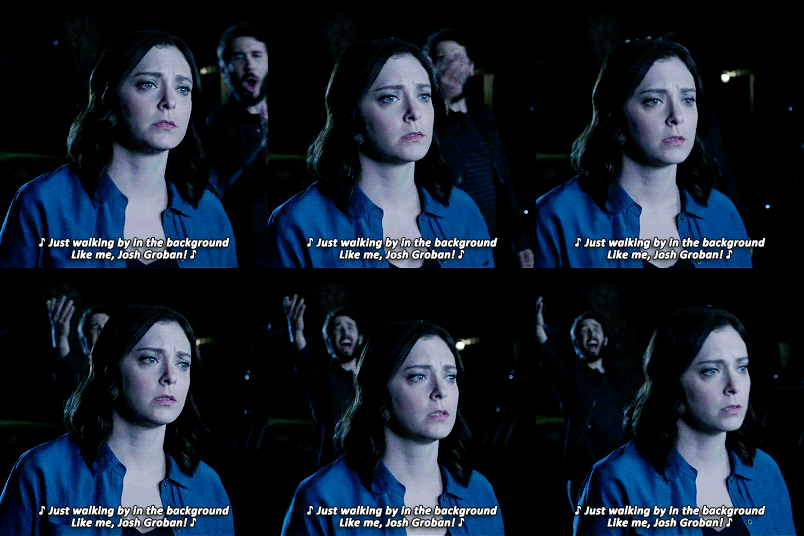
I just did a bit of confused googling, because, at the end of Book 1, Maria received a letter from Julie Karagina, which said that Julie was being pushed to marry Pierre.  Pierre is now married to Helene Kuragina, and I was briefly puzzled as to whether they might be the same person, Julie and Helene, but they are not - they just have last names which are almost identical, which you can understand is very confusing.  But Julia Karagina is just Julie Karagina, and not part of the plot right now.  And nor is Helene.  Also, I've been told that a fair English substitute for the Russian 'prince' is 'duke', so I'm mentally substituting that the whole time.  I ended by skimming the wiki page for Natasha, Pierre, and the Great Comet of 1812, which is an adaptation of 70 pages of this book.  It's 70 pages I haven't read, so I did learn at least one spoiler.  I also learned that Josh Groban played Pierre, so that pleases me.


Anyway, Mademoiselle Bourienne asks the old Prince about Prince Vasili's visit, and he insists that he has absolutely no idea why they are coming, and particularly he has no idea why Anatole is tagging along.  He asks if Maria or Mademoiselle Bourienne know, but they insist they don't either.

After dinner, he goes to see the princess, who is hanging out with her maid.  She tells him she just didn't feel well - she is heavily pregnant - and that she doesn't need anything.  Then he goes to check on the servant, to make sure he's put all the snow back on the road properly.  He has, and later, Vasili's footmen and coachmen have to drag the coach over it.  I am enjoying the old Prince's pettiness.

Anatole "regarded his whole life as a continual round of amusement which someone for some reason had to provide for him".  He's looking on this visit to "a churlish old man" and an "ugly heiress" as one of those amusements.  He thinks, why not marry her, if she's rich?  "That never does any harm".  Then he goes to see his father, who has separate rooms.  Prince Vasili compliments his son on his attire, and Anatole responds by asking whether Maria is very hideous.  His father reminds him to take this seriously.  Careful Vasili, your gold-digging is showing.

Downstairs, everyone is gossiping, particularly about Anatole's looks.  They approve.  Maria is nervous.  The little princess - Lise! - and Mademoiselle Bourienne do a quick romance-movie makeover.

Maria is a bit offended, both by the fact that she's nervous because a suitor has arrived, and the fact that no one thinks that's out of character for her.  She may also have picked up on the fact that, as the narrative explains, both Lise and Mademoiselle Bourienne think she's so plain she couldn't ever be a rival, so they're both really doing their absolute best to make her pretty.  They do three outfit changes, and Maria nearly bursts into tears looking in the mirror and makes them stop.  The only bit of her the narrative thinks is pretty is her eyes.   Both Mademoiselle Bourienne and Lise think she looks worse than ever, but stay quiet and leave the room, while Mary falls into a quiet despair over the fact that she's too ugly to ever have the handsome loving husband and child that she dreams of.  I don't want to slap her any more.  She does quick prayer and considers joining a nunnery, but then goes back to the marriage daydream, especially the bit about the handsome loving husband.  Even though she's pretty sure it's a temptation from Satan.


So, she decides to stop worrying about her future and just leave it all in god's hands.  It seems to work for her.

Chapter 4


...then she goes downstairs and is so struck by Anatole's physical beauty that she can barely look at him.  


Anatole isn't good at conversation, but he's so confident and pretty that staying silent works for him and makes people want to impress him.  Lise ends up carrying the conversation, because she's a very good socialite.  Anatole finds himself quite attracted to Mademoiselle Bourienne, especially when she speaks French to him, and hopes that Maria will bring her along when they marry.  The old prince is sulking in his study.  He doesn't want his daughter to get married and leave him, and he doesn't like acknowledging that to himself either.  Even he thinks no one could marry her for love, "plain and awkward" as she is, and wonders if she might be happier to be a spinster.  He decides that he won't accept Anatole's proposal unless he is worthy of Maria.  Then he goes downstairs, and immediately sees that, firstly, Maria does not look good dressed up in Mademoiselle Bourienne's things, and, secondly, Mademoiselle and Anatole are having lots of eye-sex.

The old prince has a brief chat with Vasili, then tells his daughter she looks like a fool and she is banned from dressing up, reducing her to tears.  Then he goes to speak to Anatole, to ask if he's going to the front (I think the old prince knows perfectly well that he isn't).  I am really hoping he stops this marriage.  I am starting to think that everyone might be better of if they'd just let Helene and Anatole do some weird incest thing so they left everyone else alone.  The old Prince lets Anatole go back to the women, and Prince Vasili immediately proposes marriage between their children.  Old Prince Nicholas protests far too much that no one could think he was unable to part from his daughter - no one did, until he said that - but that he would like to know his future son-in-law better.

The three women have so long been starved of young male company that they're drinking Anatole right up like a tall glass of water.  Maria is convinced he is kind, brave, determined, manly, and magnanimous.


Meanwhile, Mademoiselle Bourienne has long been daydreaming of a Russian prince who will recognise that she is far, far more beautiful than Princess Maria and sweep her off her feet instead.  She's pretty sure Anatole is that prince.   She doesn't yet know about his menage-a-trois idea yet, the one where he's married to an actual Princess, with money, and Mademoiselle Bourienne - Amelie! -is his mistress.

Lise, the little princess, is just flirting from old habit.

Poor old Maria.  While she plays the clavichord, Anatole and Amelie and standing next to each other, playing footsie out of sight.  She thinks their smiles are for her, and thinks herself lucky to have such a supportive friend, and such a supportive and handsome future husband.



Wednesday, 15 May 2019

In Which We Discuss War & Peace, Part 3, Chapter 2

Chapter 2


Prince Vasili has arranged to go on a tour of his neglected estates, taking along Anatole so he can be married to the daughter of Nicholas Bolkonski.  Before that, he has to sort out Pierre.  Also, it's now November 1805, but I can't remember what month and year it was when the book started.  Pierre is now 'absurd, excited, and foolish' as a young lover should be, but has not yet proposed to Helene.


Vasili feels slightly resentful about this, since he's been so kind to Pierre.  It's been six weeks since the 'at home', and Pierre had decided that he really shouldn't marry Helene, but also hasn't yet been able to leave.  Every day, he feels more Expected and entwined.  Vasili has been organising events that Pierre must attend basically every day, so it makes it even harder for him to escape.  Sometimes, Pierre tries to convince himself that he was wrong about Helene before, when he thought she was stupid and probably incestous, and so it would be right to marry her now, but it doesn't stick.  Basically, everyone is attempting to politeness judo Pierre into wedlock.  If this were a different sort of book, Helene would be sticking pins into condoms.


For this evening, Vasili has arranged a party for close family, and given them all to understand that Helene's fate will be settled this evening.  Pierre and Helene are sitting next to one another and feeling quietly pressured.  Pierre is a big, confused, dumb kitten.  He's trying to figure out how he and Helene got so intertwined.  Finally, they are left alone, and Pierre feels like he ought to talk of love but also that he really doesn't want to.    He feels like there's something fundamentally wrong with him that makes him wrong for Helene (he's been going back and forth on that all evening).  Pierre tries to retire for the evening, but Vasili gives him "a look of stern inquiry" as if he's being weird and makes him sit down again.  He also refers to Helene as 'Leyla', just so we have another name to add to the list.  Pierre desperately changes the subject again.  Vasili leaves them alone, then sends his wife to check on them.  Pierre has still not proposed.  Taking matters into his own hands, Vasili decides to just carry on with the politeness judo, and goes to congratulate them on their engagement as if it's actually happened, loudly, and dragging the rest of the family into the conversation, presumably in the hope that Pierre won't be so rude as to contradict him.  He isn't - they're married within six weeks.

Honestly, I'm pretty disappointed with Pierre.

Tuesday, 14 May 2019

In Which We Discuss War & Peace, Part 3, Chapter 1

This section has 19 chapters, so I should be done with it by June.  By that point, I'll also be done with my exams for the year - well, for the entire degree, since next year is all coursework -  which is exciting!  I'm now at 17%, and I'll be at 24% by the end of this part.


Chapter 1


We're back to Prince Vasili, and it's been a while.  Maybe I should start tagging each post with the characters that appear, to make them easier to look up.  Prince Vasili is the father of Anatole, Hyppolite, and Helene.  Prince Andrew ran into Hyppolite, also a prince, in the last book, where he was the nerdy one in the regiment.  We last saw this Prince Vasili when Pierre's father (Count Bezukhov) died.  Pierre was the one who was raised in France, probably by wolves.  All of Russian society wanted to get their hands on him.  That is presumably even more the case now he has inherited his father's fortune.


Anyway, back to Prince Vasili.  The narrative is describing his character.  Apparently, he has no word for 'manipulative', in the same way that presumably fish have no word for 'water'.  He is not the sort of man to say to himself, "Pierre is a rich man, I must entice him to marry my daughter,", which is an oddly specific example from the narration.  Instead, his instinct simply tells him that certain people might be useful, and, with no premeditation, Prince Vasili begins to flatter them and gain their confidence.  Prince Vasili has done exactly that with poor Pierre, having gotten him a job and moved him into his, Vasili's, house in St Petersburg.  Without actually articulating to himself what he's doing, he's trying to get Pierre to marry his daughter, Helene.


Having not thought it through makes him appear more natural, apparently.  I assume it helps that Pierre is a big dumb kitten.

Since his father's death, Pierre has gone from lonely and free to preoccupied with people who are suddenly very interested in him.  This includes the government and his inherited Chief Steward, as well as many people "who formerly did not even wish to know of his existence but would now have been offended and grieved had he chosen not to see them".  All of them are very firmly confidence of Pierre's noble qualities, now that he is rich.  Pierre is now starting to believe them.  Even his oldest sister has apologised and been nicer to him, just as soon as she found out that the will left everything to him, the formerly bastard son.  Because Pierre is a big dumb kitten, who can't understand why anyone would dislike him, he is thoroughly convinced by those who now like him, especially Vasili who is caring for him like a father (only not like his actual father, who ignored him for most of his life).  He has managed to persuade Pierre that this is a huge favour, and vastly inconvenient to Vasili.  Vasili has also kept the land tax claimed from the peasants living on Pierre's lands, presumably also at great inconvenience to himself.


Pierre is finding St Petersburg to be just as full of kind and loving people as Moscow was, even though most of his gentleman acquaintances are now at war.  Now, his entire time is taken up with dinners and balls, and spending time at Prince Vasili's home (again, where is he staying) with Vasili's family.  Even Anna Pavlovna is suddenly being nice, while previously she had given the impression she thought him a total fool.  It is when she invites him to a party, and mentions that Helene will be there, that he finally begins to sense that a link has somehow grown up between him and Helene.  This alarms him, even though everything up til this point has passed unnoticed.  Oh, Pierre.

Anna Pavlovna is managing her 'at home' like a battlefield.  This time, her honoured guest is a diplomat from Berlin with some new gossip about the war.  She puts him with Prince Vasili and the generals.


Pierre wants to be in that group, but somehow finds himself being sent off with Helene, after being reminded, by Anna, that Helene is an exquisite and stately beauty, with many admirers, and any man would be lucky to have her.  Pierre agrees; whenever he thinks of Helene, he thinks only about whatever flattering thing someone last said about her.


Helene and Pierre are sent off to see Helene's old aunt, who is not a fan of Anna.  Helene tries smiling enchantingly at Pierre, but, because she always smiles enchantingly, he ignores it.  The aunt shows him a snuffbox, and, in leaning over to see it, he manages to come face-first with Helene's boobs, which finally gets his attention (despite his short-sightedness).  Well, actually it's her back and shoulders while she shows off her cleavage, but it's being close to her skin that has the same effect.  He realises that she will be his wife, even if he's not totally sure that's a good thing.  He tries to go back to seeing her the way he did before, but it doesn't work.

Pierre's having his Petersburg house done up, because the architect suggested it.  Anna brings that up, and advises him not to leave Vasili's house, especially with Vasili being such a good friend to him.  At least not until he marries, she suggests, with a glance at Helene.


At home, Pierre tries to figure out what is going on with him.  He doesn't want to be in love with Helene; she's stupid, and it feels wrong, not least because of the rumours about her being in love with her brother Anatole.  Then he gets distracted by thinking of her being loving, and how she would probably be totally different to the way he's thought of her for his entire life up until now.  Big dumb kitten.  He also thinks about how everyone he's spoken to, for months, has just seemed to assume that he and Helene are together, and talk about them as if they're together, and he feels trapped.  Also, he keeps getting distracted by thoughts of her 'womanly body'.

Monday, 13 May 2019

In Which We Discuss War and Peace, Part 2, Chapters 20 & 21

Chapter 20


The battle appears to be lost, and the regiment's general is so upset at the thought that he might be blamed for this that he charges straight through a line of bullets towards the French.  He gets all the way through and out the other side, to more Russian soldiers.  He tries to command them, but they're all too panicked.  But then the French suddenly retreat because Timokhin's company has crept up behind them, so that's all right.  Dolokhov captures a French officer, and makes sure to point it out to the commander.


Everyone had forgotten to tell Tushin's regiment to retreat, but the French didn't attack them because they didn't believe anyone would continue to attack from unguarded guns.  Tushin's excited about the village being alight.  Poor village.  The breeze is spreading it.  Tushin didn't have time to be afraid, he was so focused on running his regiment.  He's named all the guns and talks to them while he fights, imagining he is a giant throwing cannonballs at the French.  Prince Andrew finally gets the message to retreat through to Tushin, and helps him pack up the cannons.   They bond quite a lot in that very short period.

Chapter 21


It's getting dark and the battle is still going.  The surviving troops have been ordered to abandon the wounding, but this is difficult as many of them drag themselves along behind them and call for help.  Tushin has found room for two of them, one of which is Nikolai, who seems to be basically fine apart from a sprained arm.

It's now dark enough that the soldier's can't see each other, so the fighting dies down completely and people start coming out to compare scores.  The Russian forces are positive that they've won this one and celebrate with vodka.  Clearly, vodka is a drink for all occasions.  Like tea.

(I am British).

They've captured a French soldier and haven't bothered to feed him, which seems a bit rude.  Officers are flocking in to look at the colonel Dolokhov captured.  They're also informing Bagration of their actions during the battle, and at least one is taking a little bit of artistic license in making himself out to be a bit more skilled and intentional than he actually had been.  Another claims that he and Prince Andrew had only just missed one another, but Andrew flat out denies it.  Bagration believes that the left had retreated very early on, and is asking how two guns in the centre came to be abandoned.  Tushin walks in in the middle, believes he's asking about something that happened on the left and gets flustered, but Andrew is able to explain everything, stating that they owe today's success to Tushin and his battery.  Tushin thanks him, but Andrew's too busy feeling sad about war not being at all like he thought it would be.


Rostov has managed to fall asleep, despite his arm, but now he's having fever dreams about everyone back home. He wakes up, and starts feeling sorry for himself because the doctor hasn't arrived and no one is looking after him.  He is regretting this whole war business.

The chapter (and book 2) end abruptly, by telling us that the French army did not renew their attack, and what's left Bagration's detachment is joined back on to Kutuzov's army.

I like this habit of reading a chapter a day - did I mention that I was doing that?   I am, though I'm not always publishing the post every day, it depends how long it is.  I'm now 17% of the way through War & Peace.  I hope the next book is a Peace one, I do find those parts more interesting.