Monday, 24 November 2008

In Which We Discuss Pig-Heart Boy

Anyone remember that book? I vaguely recall it being made into a TV series at some point in my childhood.

Pig-Heart Boy told the story of a boy who'd been given a new kind of transplant - instead of taking a heart from a dead organ donor, his came from a pig. The book mostly focused on the controversy he faced.

I read a lot of Malorie Blackman as a child, but the last time I picked up one of her books was probably when I was about fifteen. I never did find out what happened in Noughts and Crosses. Someone remind me to find that series.

Anyway, it seems that Blackman was fifteen or twenty years ahead of her time. A new technique, developed by Richard Winston of Hammersmith Hospital in London and Carol Readhead of the California Institute of Technology in Pasadena could allow the transplant of pig organs into human bodies.

More can be read here, or through the link in that post.

Friday, 21 November 2008

In Which We Discuss The Children's Section

Why do they hide all the good books here?

In my local library (Birmingham Central), the children's section is on an entirely different floor, with miniature chairs, decorations in pastel colours, and, once, palm trees made entirely of coloured balloons.

Now, the other day, I reserved a few books - namely, Bridge to Terabithia and Christopher Pike's Weekend. I noticed that, although I'd be picking them up from the main floor, the children's section had several copies of Pike's books. So, when I returned Bridge to Terabithia yesterday morning, I decided I'd return it to the children's section, then go ahead and explore their teenage shelves.

Honestly, it's amazing how nerve-wracking that was. I felt like an imposter. I'm twenty years old, and told that I look older. I felt like Gulliver walking into Lilliput.

Once I'd got over the initial embarassment, it wasn't so bad. The staff were friendly (it looks like they shift them between floors, so I'd seen a lot of them before), and none of the small children even looked at me. It also helped that an older man was in the queue in front of me.

I never made it to the teenage section, by the way. The Discworld Big Comic, Mort, grabbed me on the way past.

It's interesting how the books are segregated, by age. As I said, I found Mort in the children's section, and it was called a Big Comic. Neil Gaiman's Sandman series are upstairs, in the Graphic Novel section. Now, Gaiman is scarier than Pratchett, but they're not terribly different. And, in fairness, Death is one of the main characters in Mort.

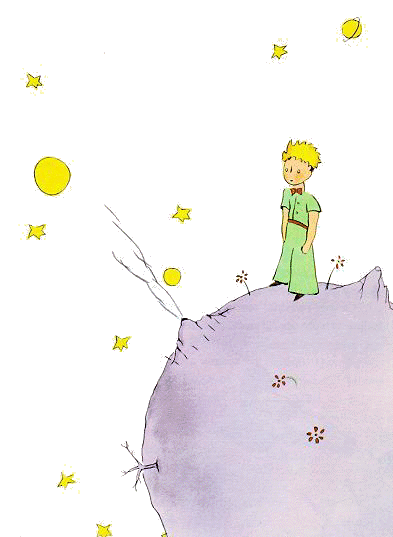
A lot of children's books can be equally enjoyed by adults, too. While many are quite vapid, and assume that young = stupid, some are interesting. They're the kind of books you get more out of, every time you read them. Things like Peter Pan or The Little Prince, for instance. They're obviously children's books, but there's a lot in them for adults as well (honestly, if you've never read them, go take a look - you'll be pleasantly surprised).

The Discworld books and the Harry Potter series have both been given special 'mature' covers, so adults don't feel silly reading them. This is essentially the same as putting a different picture on the packaging for hair dye or moisturiser, so men don't feel silly using girly products.

Thursday, 20 November 2008

In Which We Discuss Big Comics

Specifically, the Discworld 'big comic', Mort.

Originally a full novel, it has been condensed into what has been called a 'big comic', which I found in the children's section of my library.

It's disappointing, really. So many things have been cut out, in order to make it easier for children to read. I've read the book repeatedly by this point, but I'm honestly not sure if it would make as much sense if one hadn't before reading the comic.

In all honesty, I think the best use of the Mort 'big comic' would be for an older reader to use it to introduce a child to the Discworld novels. An older reader who was familiar with Mort, and therefore able to fill in the gaps in the plot.

In Which We Discuss Terabithia

Honestly, I prefer the film.

This may be because I saw the film first, and therefore got the full emotional impact of it. I suspect that that's a large part of it. But, I also think it's because I feel more attached to Leslie Burke as played by AnnaSophia Robb, rather than simply written. She seems more real, and more alive.

Ithink part of it is also that, in the book, Leslie is exactly what Jess needs at that point in his life. In the film, Leslie is more ambiguous, and can be whatever anyone requires her to be, if that makes sense. She's not just Jess', and that allows the viewer to feel more of a claim on the character, and feel more emotionally involved.

I also like the slight changes to the plot and the characters, many of which were necessary to bridge the gap between now and the time when the book was written.

I'm not sure how people who read the book before seeing the film would feel, but I felt that the film had more in it. I also like the way they spend longer on Jess' reaction, near the end, while in the book, that section felt rather rushed.

In fairness, I usually think books feel rushed; I read them so quickly that they seem to race past me. I read Bridge to Terabithia on the way to and from work - less than an hour.

You can read my comments on the film here.

Tuesday, 18 November 2008

In Which We Discuss Song Lyrics

Song lyrics are a kind of writing, different from that in books, or scripts. You're limited with the words you can choose - they have to scan, for a start. So, the best song lyrics are ones that manage to evoke strong images or feelings with only a few words, taking advantage of the music to carry the meaning instead of just relying on what is being said. Most songs today don't seem to even try to reach the pinnacle of song-writing - they just talk about how much they'd like to have sex with another person, and don't even bother with clever wordplay.


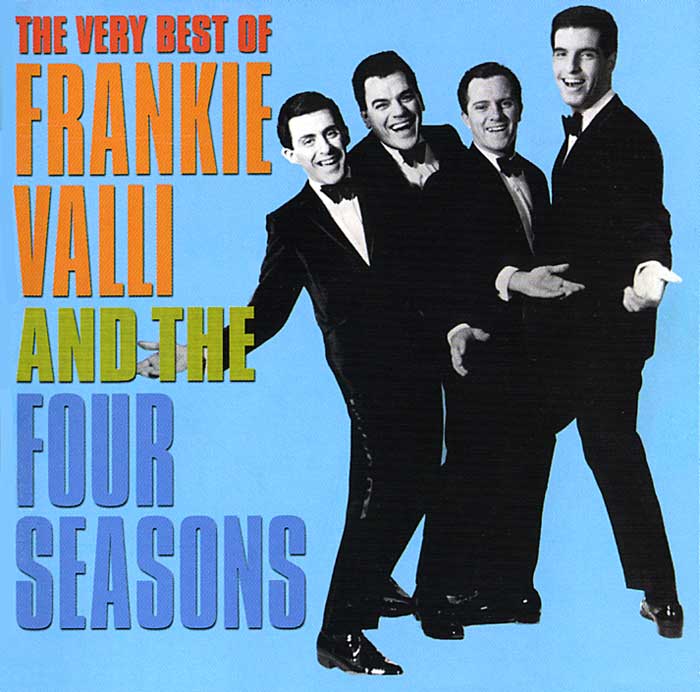
A few songs are interesting. Take Big Girls Don't Cry - although those four words are continually repeated, closer listening reveals that big girls do cry, and that the narrators belief that they don't is false - and this comes across despite the story being told from his point of view.

However, my favourite Four Seasons song is actually Oh, What a Night. I'm not sure how many people notice this, but about a minute and a half in (1:47), after the line "I felt a rush like a rolling ball of thunder, spinning my head around and taking my body under, oh what a night!", the song has around fifteen seconds of instrumentals. And if you listen closely to these instrumentals, you can hear the "bom-chicka-wa-wa" of seventies porn. Fantastic. Why don't more people do things like that?

Duets are also sadly neglected. Many of them just consist of two people singing alternate verses. Things like Baby it's Cold Outside, or even A Place For Us, performed by Leigh Nash and Tyler James - I love the way their voices intertwine. Going back to Baby it's Cold Outside, well that's just a classic.

Monday, 17 November 2008

In Which We Discuss the Maiden, the Mother, and the Other One

In many, many different mythologies, there are three magical women - the Fates, the Norns, or Shakespeare's Wyrd Sisters, for instance. Generally, these three women are portrayed as a maiden, a mother, and a crone - the three main stages of a woman's life.

Of course, these days, as Terry Pratchett put it, a women can put off being at least one of those for quite a long time. So there are four stages. The maiden, something else, the mother, and the crone.

I'm twenty years old. I'm not a maiden, and nor am I mother. I'm not a crone. So, I'm currently the other one.

Incidentally, 'the maiden, the mother and the...other one' is also taken from Pratchett's writing, when Esme Weatherwax muses on the tradition. She doesn't like to think of crones, since that would be her role.

Anyway...

My first online name was Yunalookalike. I signed up to a games site, and although I didn't intend to stay, I wanted a 'game-y' name. My boyfriend at the time had exclaimed on how much Yuna from Final Fantasy X-2 resembled me, so I just quickly tapped in the name, and didn't think any more of it. 'Yunalookalike', or just 'Yunie' became my online identity for the next three years, as I aged from fifteen to eighteen.

Now, Yuna is obviously a maiden, and although I technically wasn't at that point, my mindset was far more innocent than it is now. The name, and the connotations it had, fitted that stage of my life. Soon after my eighteenth birthday, I started using the name Deis.

Deis is a character from the Breath of Fire games. She's an immortal sorceress Naga (half-snake, half-woman), and extremely sensual. At one point, in Breath of Fire IV, the party need to enter her mind, and find her waited on hand and foot by attractive young men. She's neither a maiden, nor a mother, nor a crone.

Now I'm a little older, I've started experimenting with the name Bartelmy.

Bartelmy of the Ban is a character in Sheri Tepper's True Game novels. She's a Dervish. In the world of the True Game, the Dervish are women who train themselves, and have tremendous willpower. The rites they put themselves through result in their being unable to bear children in the normal manner - instead they pay other women to act as surrogates. Unfortunately, the woman Bartelmy chose to bear her daughter refused to give the child up. Not out of love, but because she believed that the Dervishes could give her a new and beautiful young body. They couldn't, and Bartelmy's child was unaware of her for sixteen years. Bartelmy continued with her mission, while watching over her child from afar. She appears at key moments, when she is able to help. She is not a hands on parent, but she is a mother. An unconventional one, but still a mother.

In Which We Discuss Birmingham's New Library

When I say "my library", I generally refer to Birmingham Central Library, located above Paradise Forum in Birmingham City Centre. It's fairly large, with the children's library on the first floor, fiction and a few other sections on the second floor, and reference material (which can't be borrowed) on the fourth, fifth, and possibly, sixth floors (I mostly stick to fiction, and things I am allowed to take home - although I do wander upstairs, it's not often enough to remember exactly how many floors there are).


Although each individual section isn't as large as it could be, Basall Heath Library (which used to be my local) could easily fit in just half of the second floor - it's slightly smaller than Central's fiction section, poor little thing.

Central Library towers over Centenary Square (well, it's not really thin enough to tower, but it is nice and big), where the REP theatre is located. That's the new REP - the Old Rep is in Station Street, next to the Electric Cinema (the eldest cinema in the UK, incidentally). It's an old building. I'd noticed that the escalators kept breaking down, but I admit to being a little blind to the bits of concrete falling off the outside, and the net over it to keep it all in place. I'll try looking at the outside next time, but it's hard for a book junkie to concentrate on anything, that close to a library.

Anyway, plans are now afoot for a new library to be built, combining the REP theatre with Central Library. It will be bigger, and better, and have more s
pace for books and resources (including kinds other than books,which weren't really considered when the library was originally built).


Birmingham Central Library - the entrance is on the right, but the bulk of the library is to the left.

The new combined Library/REP will cost £193 million, and building is scheduled to start in 2010, with completion planned for mid 2013. It will be located between Baskerville House and the REP, an area which is currently used as a carpark. The building of the library will increase employment (something that Birmingham needs, admittedly - handily, the location of both new and old libraries is very close to the jobcentre).

An article on Birmingham City Council's site mentions the following;
The development will include a new medium-sized auditorium, meeting and conference rooms, plus cafe and restaurant facilties that will be for the shared use of the library and the theatre. It will also include improvements to The REP's frontage and front-of-house facilties.The development will boost and consolidate the continued regeneration of the city centre's Westside and the improvement of Centenary Square.
What fun. The new library will also be more efficient in energy usage than the old one, and, hopefully, won't fall apart.

For more information, take a look here, here, and here.