| Number | Name | Author | Date Began | Date Finished |
| 1 | The Girl with Glass Feet | Ali Shaw | 8/2/2010 | 10/2/2010 |
| 2 | Misfile, volume 1 | Chris Hazelton | 10/2/2010 | 10/2/2010 |
| 3 | Cadbury's Purple Reign | John Bradley | 10/2/2010 | 1/6/2010 |
| 4 | Misfile, volume 2 | Chris Hazelton | 10/2/2010 | 11/2/2010 |
| 5 | Misfile, volume 3 | Chris Hazelton | 11/2/2010 | 11/2/2010 |
| 6 | Misfile, volume 4 | Chris Hazelton | 11/2/2010 | 11/2/2010 |
7 | Misfile, volume 5 | Chris Hazelton | 11/2/2010 | 11/2/2010 |
8 | Misfile, volume 6 | Chris Hazelton | 11/2/2010 | 11/2/2010 |
9 | Misfile, volume 7 | Chris Hazelton | 11/2/2010 | 12/2/2010 |
10 | The Fairy Godmother | Mercedes Lackey | 11/2/2010 | 13/2/2010 |
11 | Misfile, volume 8 | Chris Hazelton | 12/2/2010 | 12/2/2010 |
12 | Misfile, volume 9 | Chris Hazelton | 12/2/2010 | 12/2/2010 |
13 | Misfile, volume 10 | Chris Hazelton | 12/2/2010 | 13/2/2010 |
14 | The Wish List | Eoin Colfer | 13/2/2010 | 14/2/2010 |
15 | Misfile, volume 11 | Chris Hazelton | 12/2/2010 | 13/2/2010 |
16 | The First Casualty | Ben Elton | 14/2/2010 | 22/2/2010 |
17 | Silver Birch, Blood Moon | Various; Edited by Ellen Datlow and Terri Windling | 15/2/2010 | 17/2/2010 |
18 | Black Thorn, White Rose | Various; Edited by Ellen Datlow and Terri Windling | 17/2/2010 | 19/2/2010 |
19 | One Good Knight | Mercedes Lackey | 22/2/2010 | 23/2/2010 |
20 | Inconceivable | Ben Elton | 23/2/2010 | 25/2/2010 |
21 | Save Karyn | Karyn Bosnak | 25/2/2010 | 4/3/2010 |
22 | Pet Sematary | Stephen King | 28/2/2010 | 6/3/2010 |
Wednesday, 3 February 2010
In Which We Discuss February 2010
Saturday, 23 January 2010
In Which We Discuss Kevin (Again)
Last night, I finished re-reading Lionel Shriver's We Need to Talk About Kevin. I first read this back in 2008, and wrote a very short review of it here.
The rest of this post is going to assume that you've read the novel too, and will discuss major spoilers. If you haven't, then look away now. If you don't think you will ever read it, I'm going to quote a blurb after this so you can make up your mind properly. If you're still with us after that, don't cry about being spoiled, k?
Nature or Nurture: What makes a monster?
Kevin Khatchadourian killed seven of his fellow high-school students, a cafeteria worker and a teacher, shortly before his sixteenth birthday. He is visited in prison by his mother, Eva, who narrates in a series of letters to her estranged husband Franklin the story of Kevin's upbringing.
A successful career woman, Eva is reluctant to forgo her independence and the life she shares with Franklin to become a mother. Once Kevin is born she experiences extreme alienation and dislike of Kevin as he grows up to become a spiteful and cruel child. When Kevin commits his murderous act, Eva fears that her own shortcomings may have shaped what her son has become. But how much is she to blame?
As I said in my other post, in my first reading, I found the narration flowery. It threw me out of the story at first, and although it is semi-justified by the fact that Eva does write for a living, and is quite well-educated, I still found it quite jarring. I suppose it's also justified by Kevin's skill with words - his English teacher describes his writing as worthy of Swift, and comments on his vocabulary - since there are quite a few hints about just how much Kevin has inherited from Eva.
I also found the narrative to move irritatingly slowly. I wanted to find out what happened when he was (three days from) sixteen, not about before he was born, or what he was like as a baby or a toddler. But, when I did find out precisely what had happened when he was sixteen, I understood the point. I realised (especially after this second read-through) that I'd missed the whole story.
One major strength this novel has is in characterisation. The characters which are mainly dealt with are those of Kevin and Eva. In a book of almost four hundred pages, they are on every single one of them. They seem real, believable, solid. In contrast, more secondary characters like Franklin and Celia seem almost two dimensional and flat. But then, that's the point - the point of the novel is to understand Kevin and Eva as individuals, and as they relate to each other. As Eva herself acknowledges, this isn't something that can be easily explained - it's best understood by piling up all those little moments and anecdotes which seem flimsy by themselves, in order to build up a stronger understanding. This is what Shriver does, masterfully, over the course of those four hundred pages. Reading the novel a second time, knowing what was coming, I could take my time to fully absorb this.The twist at the end of the novel changes ones viewpoint of Eva. She's not just an incidental character; she's important. She's the one member of Kevin's family whom he decided not to kill. Reading it over again, it becomes more apparent that Eva and Kevin were too alike. He didn't come from nowhere - his traits can be traced back, through his mother, and through other members of his family. It's this single combination that's deadly.
I also suspect that my own growth has changed my viewpoint. I've gone from nineteen to twenty-one between the times I read this book, and I've discovered the concept of Childfree. While I'm beginning to suspect that I'm merely childless, and not childfree - I'm a fence-sitter - I whole heartedly agree with the idea that no one should be expected to have children, just because they can and it's what their parents did.
Knowing about the childfree also makes it easier to understand the way that a mother can simply not like her own child. Again, as Eva comments in the novel, getting pregnant - or rather, trying to - is like leaving a door open. You never know which stranger is going to walk in.
A lot of people talk about loving their children no matter who they are, and what they're like. Can that really be called love, that undiscriminating, unspecific affection? If it makes no difference what they're like, then could you not love a wall just as easily? I suspect that's the difference Kevin noticed between his parents. His father loved him because he was his son. His mother disliked him because he was Kevin. And, in the end, he showed very clearly that he preferred his mother to his father.
I don't think the book has any huge point or moral. I just think it portrays a fascinating relationship, and I found that I could appreciate that much better the second time.
Saturday, 16 January 2010
In Which We Discuss Downward to the Earth
This is a review I wrote several years ago, when I was first getting the hang of it. I've edited it slightly here, but I haven't bothered to rewrite it completely since I haven't read the book in several years. I've also cut the ending off because it was embarassingly fangirl-y and not very helpful.
Downward to the Earth is a sci-fi novel set in the distant future. The main character, Gunderson used to work as an administrator, on a planet called Belzagor. The main species on the planet are a race known as Nildoror, closely followed by Sulidoror. The Nildoror resemble elephants while the Sulidoror closely resemble apes, leading the first humans to encounter them to believe them to be an unintelligent species. It was during that time that Gunderson lived on Belzagor, when the Nildoror were used as beasts of burden. However, as they discovered soon enough, the Nildoror and Sulidoror are at least as intelligent as humanity, if not more so.
Feeling guilty now, over his part in that, and in various other things that took place at the time, such as his having inadvertently trespassed upon a ritual both Nildoror and Sulidoror view as sacred, Gunderson has returned, to discover what happened to his old friends, and what exactly the relationship between Nildoror and Sulidoror is, as well as to make amends, in the most dramatic, self-sacrificing way possible.
I found that this book drew me in immediately, and I literally could not put it down. Silverberg's writing is easy to follow and understand, and he is very good at describing the odd things that take place throughout the story.
It's a little too short and fast moving for my liking (but then, due to the speed at which I read, everything seems to move too fast), but the characters are believable, and realistic. The plot is absolutely amazing, and the philosophical overtones are fascinating. For instance, as I mentioned, the Nuldoror and Sulidoror were originally thought to be unintelligent, due to their appearance. Gunderson later discusses this with a Nildoror, describing elephants to him, and why, due to the physical similarities, they treated the Nildoror the way they did. The Nildoror raises the point that maybe it's not that the elephants are too unintelligent to communicate with humanity - perhaps it's humanity who lack the skills to communicate with elephants. A similar theme continues throughout the book.
To be honest, my descriptions can't do this book justice. It's not overly long, so there aren't as many twists and turns as in other books, yet the amount of depth achieved in that short space is incredible. Gunderson's choice is an incredible one. It's impossible to know if he's doing the right thing, or if he's doing it for the right reasons. Yes, he wants to make amends, but is this choice really the best way? He knows it's dangerous, and he's seen what happened to Kurtz, a former friend of his. Silverburg's writing allows the reader to feel as confused and unsure as Gunderson is.
The ending, and the results of the various decisions made is amazing. Like many sci-fi books, the ending was always in plain sight if you knew what you were looking for. Rather than being sprung on you, it grows logically, yet still manages to be a surprise.
In Which We Discuss Robert Silverberg
Warning; this post will contain spoilers for Nightwings and Downward to the Earth, especially if you've read one but not the other.We've got that out of the way now? No one here who doesn't want to be? Good.
I finished Nightwings in a rush last night, and I found myself struck by how similar the ending was to that of Downward to the Earth.
In Downward to the Earth, the hero takes part in a ceremony which changes his body, and makes him one with the other creatures on the planet. There's also another character in whom the ritual fails, due to their own moral failings.That's also how Nightwings ends. In Nightwings, there are actually two ceremonies - one called 'renewal', in which the body becomes physically younger, and another which involves joining together with the minds of the other beings on the planet.
I find it interesting that Silverberg has repeated this idea, of a physical change as a new beginning, and this goal of full, true, empathy between various - very different - people. In both cases, this change is difficult to attain, and those who want it most, for their own selfish reasons, fail, while those who seek true redemption succeed.
Just a thought.
Friday, 15 January 2010
In Which We Discuss SF Masterworks
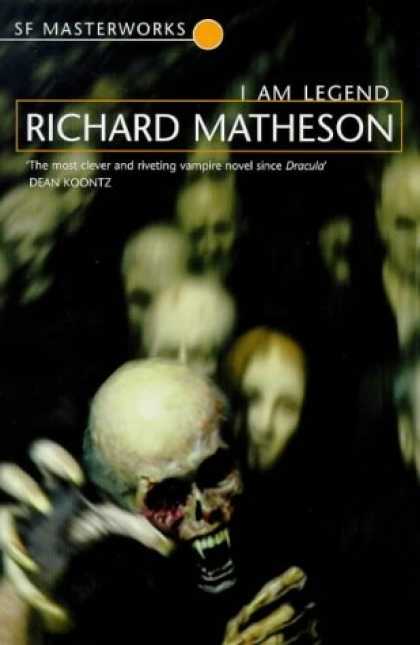
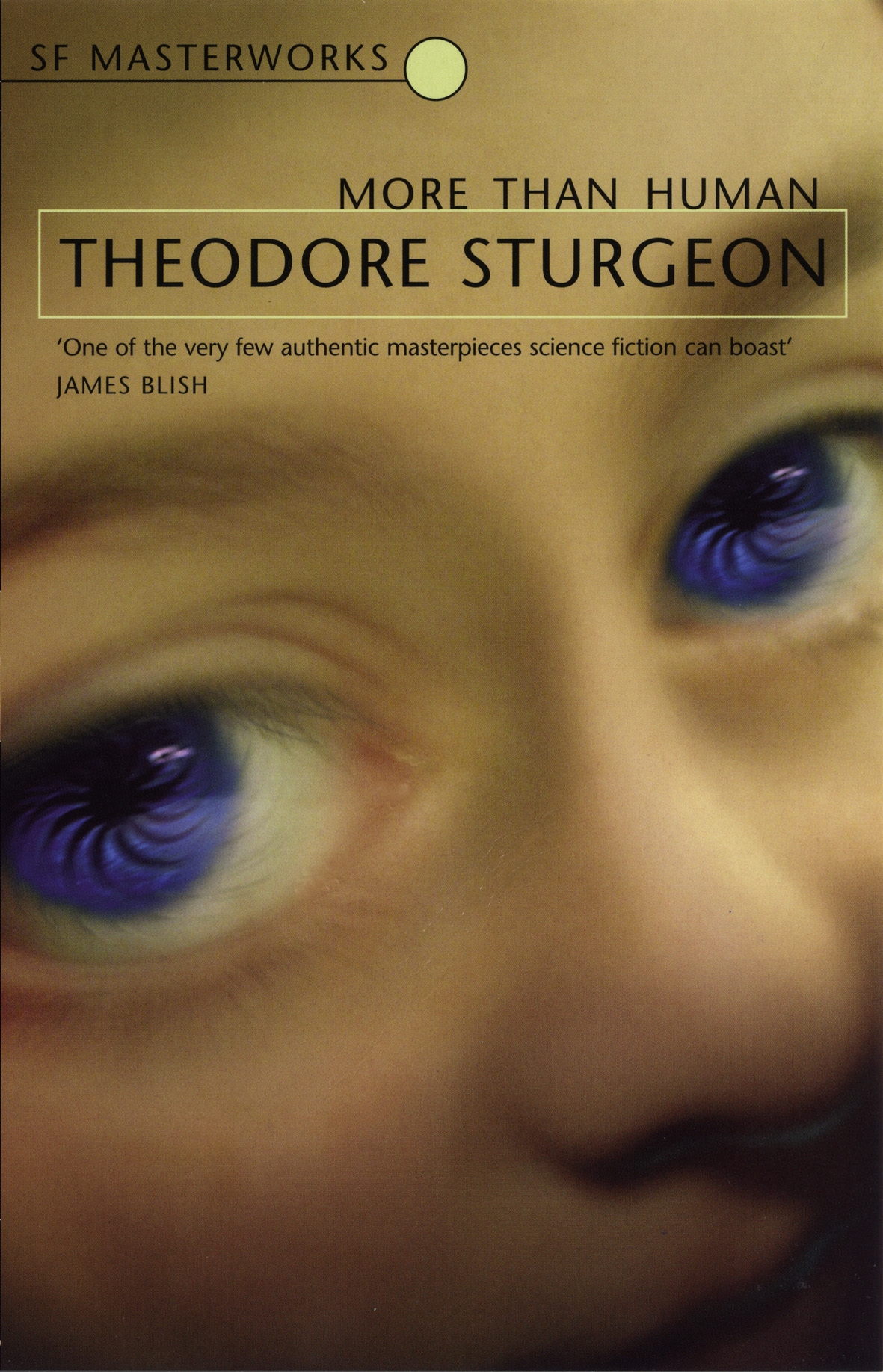
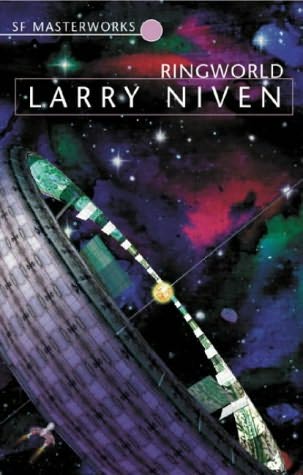
This is the paperback list, although there's also a hardcover series.
Monday, 11 January 2010
In Which We Discuss Fantasy Masterworks
In Which We Discuss Fantasy
I love Gollancz SF and Fantasy Masterworks series.
For those unfamiliar with them, the SF and Fantasy Masterworks series are great fantasy and sci-fi novels, reprinted by Gollancz in covers that look really, really pretty on a shelf together. Each one has a number - I think they initially released one every month or so, although they seem to have stopped at just over sixty for both - and comes in pretty colours which complement each other.
What I really like about the series is that it's encouraged me to read books that I might not have picked up otherwise. My logic is that I like most of the books in the series, so there's a pretty good chance that I'll like the rest of them.I picked up my first, Hope Mirrlees' Lud-in-the-Mist in a charity shop a few years back. I got Sheri Tepper's Beauty in Waterstones, mostly because I'm a big fan of Tepper, ever since I found a copy of Jinian Footseer in another charity shop years ago. Those are both in the Fantasy series, numbers 11 and 14 respectively. I decided then to try to get the rest, since I enjoyed both of those.
Then I picked up another Tepper, Grass, in the SF series, and decided to collect those. I usually think of myself as more of a sci-fi than a fantasy fan, but I seem to have much more of those.
I'm going to list down the novels in two tables, in another post, so I can keep track of what I've got, and which ones I need.
Initially, I began this post to talk about Jack Williamson's Darker than you Think. I love the title - whenever I read it, I imagine David Bowie in Labyrinth. You know that line where he says "it's further than you think"? Well, exactly the same tone.
Random trivia; my middle name is Jareth.
Anyway, the book's got a pretty interesting take on werewolves and vampires, and other mythical creatures. It's a little hard to explain, but the explanation is essentially mathematical, and links to probability and telepathy. It's fascinating. But far too short.
Anyway, off to make tables.
.jpg)