Sunday, 27 October 2019

In Which We Discuss War and Peace, Part 11 Chapter 28

My Masters project started and I began applying for PhDs, both of which knocked me for a loop, hence the delays.  I've gotten things a little more under control now, so we'll see how this goes.

Chapter 28

Pierre has decided to disguise his identity and pretend he doesn't speak French, at least until he gets a chance to kill Napoleon.  He'd intended to hide from the French knocking at the door entirely, but he's too curious.  The French officer comes in, compliments the decour (in French) and complains about the Russians not speaking any French.


Makar Alexeevich tries to shoot him, but is stopped by Pierre.  In all the excitement, Pierre forgets not to speak French, because he's a big dumb kitten who is absolutely terrible at all this.


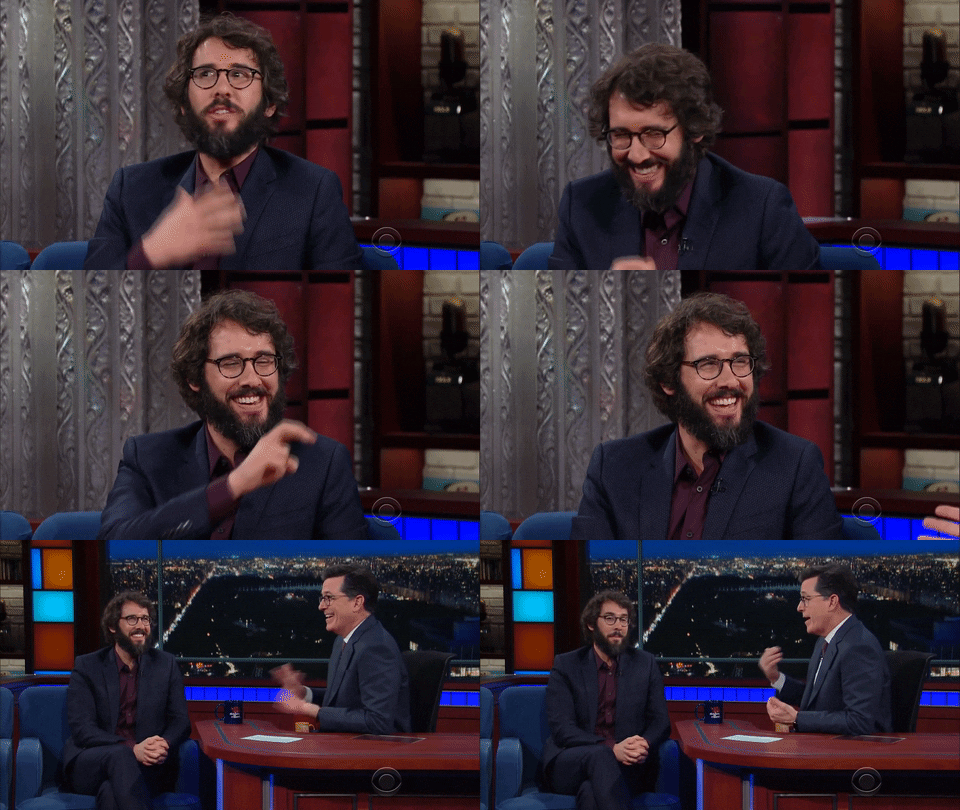
(The joke there is that Josh Groban plays Pierre in Great Comet).  Pierre pleads with the Officer not to punish Makar because he's a drunk who doesn't know what he's doing.  The officer concludes that Pierre must be French because, from his point of view, only the French can perform noble deeds.


Pierre tries to convince him otherwise, but the officer just winks at him and says they can tell that to others.  He hails Pierre as a brother, and Pierre gives up on convincing him otherwise.  To be fair, Pierre was raised in France and has a French name, so he can't really go around objecting when people assume he's French.  The soldiers move in comfortably and start preparing their lunch.


Friday, 11 October 2019

In Which We Discuss War and Peace, Part 11 Chapter 27

Chapter 27

Pierre is still in Moscow, and the French invasion manages to reach him by the 2nd of September.  It's spiralling outwards in a relaxed manner.  Pierre has also managed to gather something of a relaxed manner, by sorting through Joseph Alexeevich's study.  He's having a bit of a crisis and has decided to remain in Moscow so he can either assassinate Napoleon or die himself - he doesn't seem terribly concerned as to which.  I presume he succeeds in neither, since I'm under this impression this is not an alternate-universe telling of the history of the French invasion, and I've heard some spoilers about future plot elements which I'm trying not to think about, but which imply that Pierre lives a little longer.  Pierre is feeling truly Russian, and as driven as he was to get to Borodino (before he learned what a battlefield is really like).  He also can't back down, because he's told the Rostov's he's remaining and he feels like he would lose face if he didn't.  He's pretty sure he's going to die, but he's okay with the romance of that.  The servants are subduing a drunken rampage by Makar Alexeevich - Joseph's brother, who is also trying to kill Napoleon, but is too drunk to know who or what Napoleon is - when the French knock at the door.

Thursday, 10 October 2019

In Which We Discuss War and Peace, Part 11 Chapter 26

Chapter 26

The French enter Moscow - with a translator, to ask where the army is - and cease being an army and become marauders.  Even after leaving Moscow, they are never an army again, after looting Moscow.   Tolstoy theories that Moscow is different from other occupied cities because it was abandoned by the inhabitants first, rather than welcoming the invaders, and so it burnt because it was in a position in which a city must burn. 

Wednesday, 9 October 2019

In Which We Discuss War and Peace, Part 11 Chapter 25

Chapter 25

We're still with Rostopchin.  By 9am, no one is coming to him for instructions and he can longer tell himself that he's the leader of his people, as he did when things were peaceful.  He is feeling very powerless and exasperated when the superintendent of police comes to tell him that an immense crowd has gathered in the courtyard.  Rostopchin decides the crowd must be looking for a victim to blame, because he is and he's projecting.  He tells the crowd he's going to fetch the villain then stalks back into his room.  Apparently, he was referring to Vereshchagin, the artist and political prisoner he sent for at the end of the last chapter.  When Vereshchagin arrives, Rostopchin publically denounces him as a traitor and hands him over to the crowd.  They pause, despite Rostopchin demanding that they beat the traitor.  It's basically that scene in The Handmaid's Tale where the handmaids have to murder the doctor.  Vereshchagin points out that there is one god above them all, but he's interrupted when a soldier, after much prompting, hits him on the head with the blunt end of his saber.  This sparks the crowd into madness, and they beat Vereshchagin and trample him and anyone who gets underfoot.  After he's dead, they're suddenly struck with guilt and horror.


Oh, wait, I looked it up and while Vereshchagin is the name of a Russian war artist, he was born in 1842 and is no relation to this Vereshchagin, who is an invented merchant and suspected Napoleonic spy, here to demonstrate Rostopchin's poor leadership skills.  Anyway, Rostopchin starts to panic at having gotten exactly what he called for, and climbs into his coach to head to his country house, away from Moscow.  He comforts himself with the idea that he's working "for the greater good".


...typing that sentence sent me on a binge for Harry Potter memes.  Anyway.  Rostopchin also comforts himself by telling himself that Rostopchin was sentenced to death anyway, which he wasn't, he was sentenced to hard labour.  It kind-of works - Rostopchin is distracted as he shouts orders at his country house, and as he leaves, right up until some injured men ask for help on the road and he has a little flashback and demands his coach driver drive faster.

Rostopchin ends up with Kutuzov, and tells him everything is his fault for abandoning Moscow, but doesn't quite specify what 'everything' is.  Kutuzov says he won't be giving up Moscow without a fight, but Tolstoy doesn't seem to be sure of what he's thinking at this point.

Tuesday, 8 October 2019

In Which We Discuss War and Peace, Part 11 Chapter 24

Chapter 24

This chapter is about Count Rostopchin.  I can't remember who he is.  I looked it up, and apparently he is a real person and the mayor of Moscow.  He's offended that he's not been asked to be part of the council of war and because Kutuzov wasn't interested in his plan to defend Moscow.  No one seems interested in patriotism at all, being more interested in not-dying, and no one wants to fight another battle, leaving Rostopchin very confused.  Rostopchin has just been woken from his beauty sleep with orders from Kutuzov regarding the abandonment of Moscow.  Tolstoy now refers to Rostopchin's later memoirs regarding what he was thinking.  Apparently, his goals were to "maintain tranquility in Moscow and expedite the departure of the inhabitants".  Tolstoy does not believe him, and also claims that Rostopchin "had no understanding at all of the people he supposed himself to be guiding".  Basically, he's been putting on the equivalent of a Cockney accent, saying "apples and pears" and then being really pleased with himself for communicating so well with the commoners.  Tolstoy posits that Rostopchin didn't want to lose that feeling of power when Moscow was emptied, since his whole position - and the one he's been pushing on the city - is about standing up to the French.  In sulking over this, he's failed to do his actual job, which is to remove state property from Moscow, and now he's mad at Kutuzov about that.  He's shouting out the few orders he can be bothered to give, including that all the prisoners should immediately be freed from the prisons, except Vereshchagin, who should be brought to him, since he's not been hanged yet.  Vereshchagin is also a real person.

Monday, 7 October 2019

In Which We Discuss War and Peace, Part 11 Chapter 23

Chapter 23

This chapter begins with a fight on the street which quickly grows into rumours and riots, because everyone is tense.  They're also all very confused over whether Moscow is being evacuated or not and the broadsheet isn't helping.  They end up pursuing the chief of police, who also refuses to give a straight answer.  The people of Moscow are not happy.


Sunday, 6 October 2019

In Which We Discuss War and Peace, Part 11 Chapters 21 and 22

Chapter 21

We're now back with the Russian troops evacuating Moscow.  Some of them begin looting on the way out.  The shopkeepers ask the officers for help - some of them pointing out that there's no point defending their goods from the Russians when the French will be along in a minute - but everything's chaotic.

Chapter 22

Apart from all that, the city is deserted.  The Rostov's house is entirely empty except for the yard poter, Ignat, and the page boy, Mishka, who's playing with the harpsichord in the drawing room.  They've remained with some of the other servants.  A strange officer turns up with "familiar Rostov features" and asks for Count Ilya.  The housekeeper, Mavra Kuzminicha, has to tell him that he's missed the family, but gives him some money to be getting on with,  I have no idea who he can be - Mavra would recognise Nikolai or Petya, and I don't think we've been introduced to other young Rostovs.